

CARDIAC, AORTIC
AND MITRAL VALVE
SURGERY
CARDIAC, AORTIC
AND MITRAL VALVE
SURGERY
UHealth's Cardiac Surgery team is committed to delivering excellence in minimally invasive approaches to cardiac surgery. As an emblem of our dedication to saving lives, we're proud to be among an elite group of hospitals to have received the Mitral Valve Repair Reference Center Award, as designated by the American Heart Association and the Mitral Foundation. In addition, UHealth Cardiac Surgery has earned maximum star ratings from the Society of Thoracic Surgeons for mitral valve repair and replacement and aortic valve replacement.
Our team is highly trained in all aspects of cardiac surgery and is recognized as being among those achieving the nation's highest survival rates in cardiac surgery.
Why Choose UHealth?
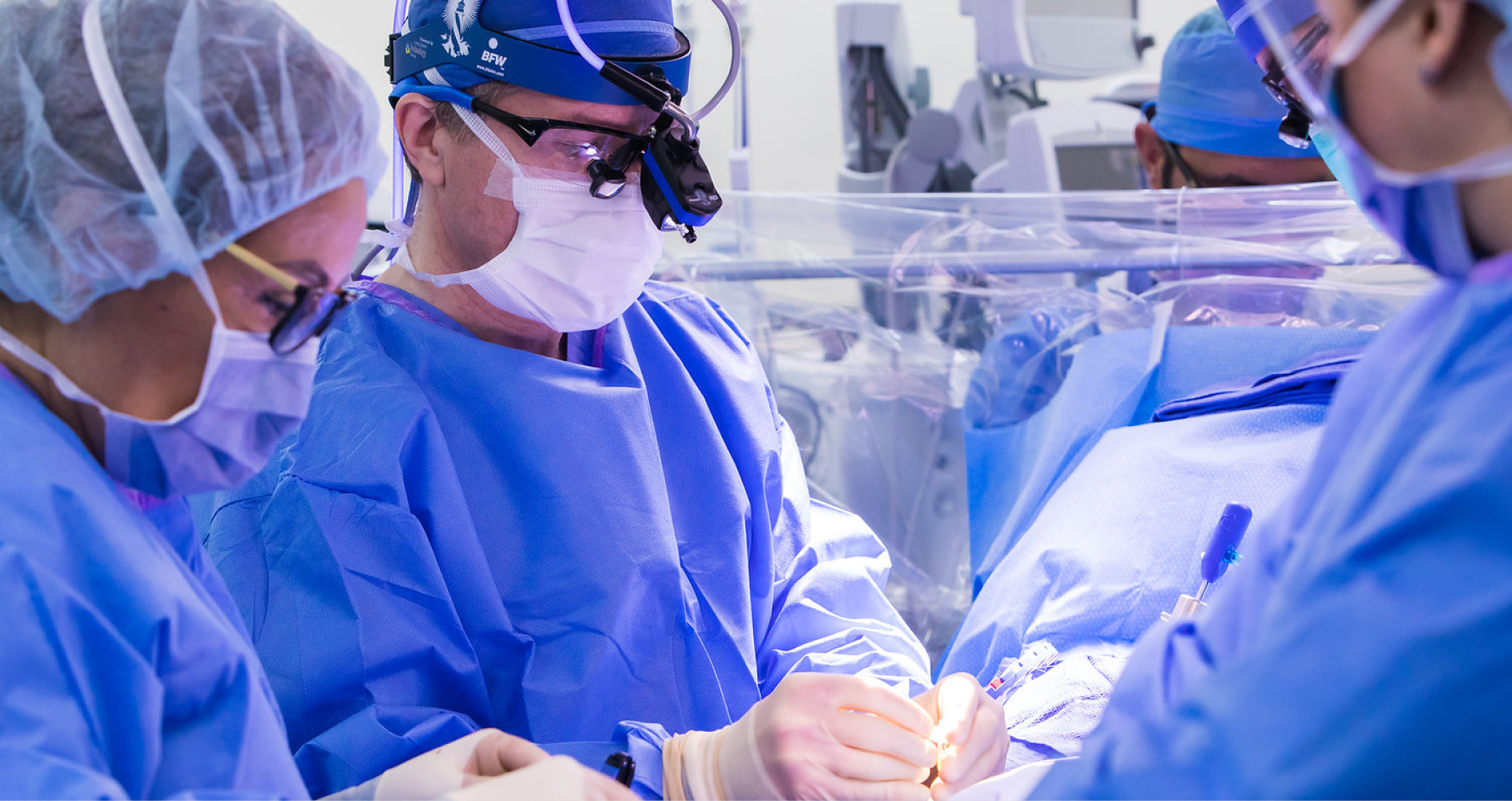
A multidisciplinary approach. Our world-renowned surgeons combine their experience and expertise to develop a cardiac care plan for each patient.
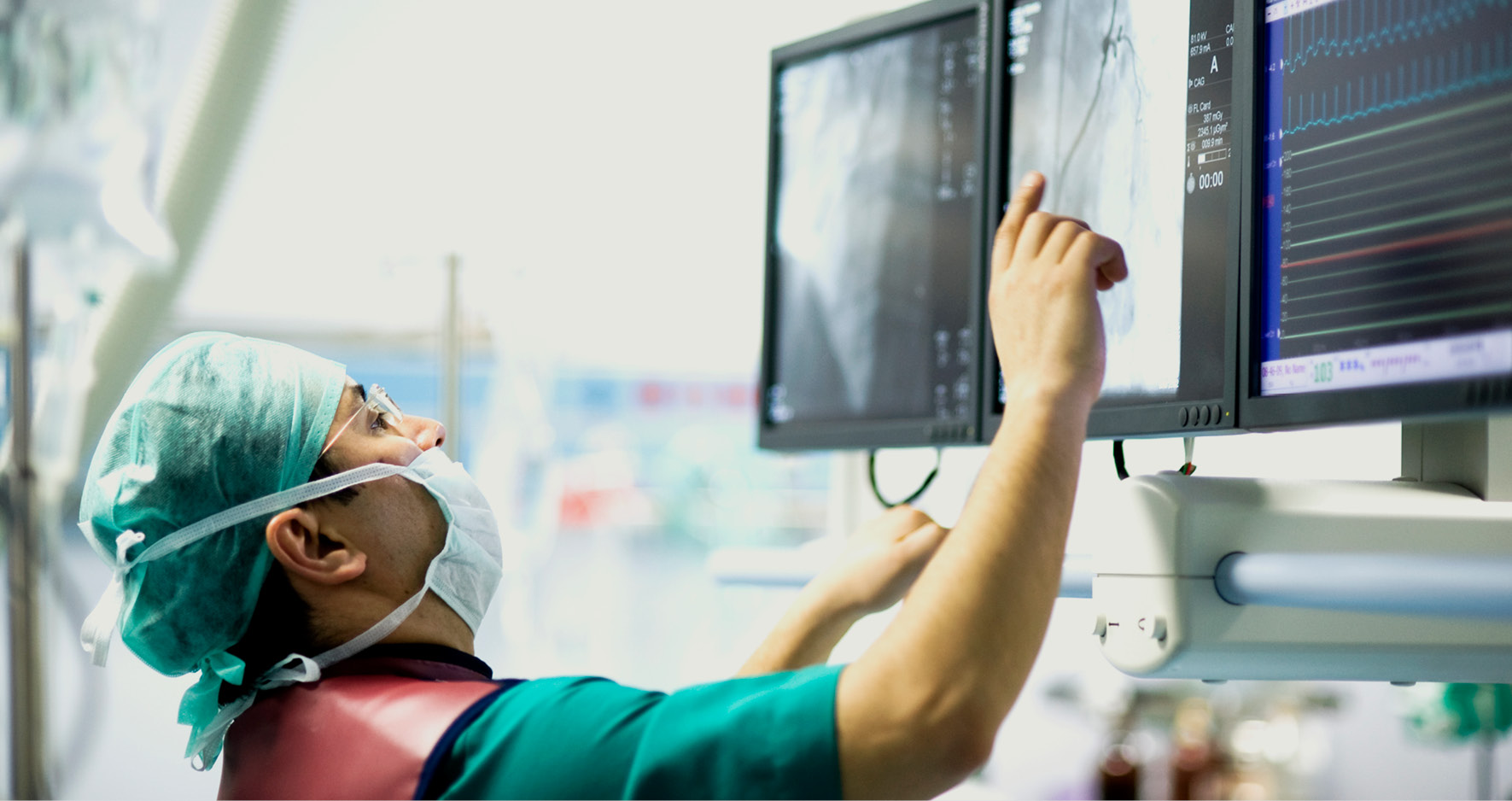
Academic-based medicine. Our expert team not only utilizes the latest surgical methods; as an academic-based surgery program, they develop them.
OUR EXPERTS

JUAN
P. UMAÑA, M.D.
Chief of Cardiac Surgery
Professor of Surgery
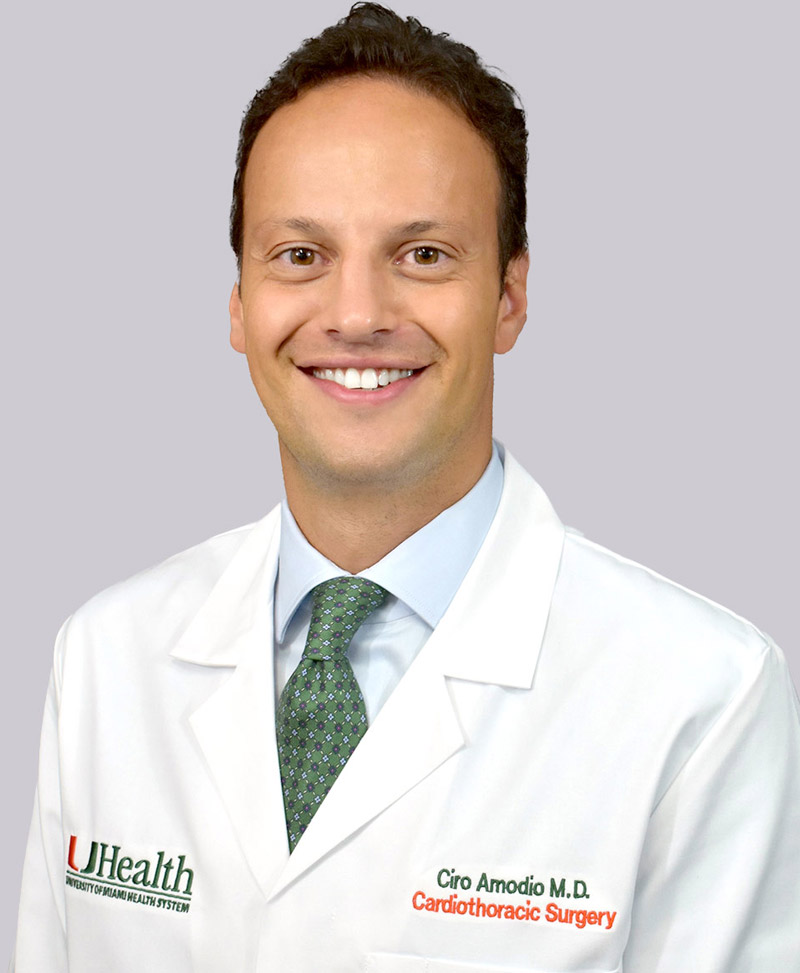
CIRO
AMODIO, M.D.
Cardiac Surgeon
Associate Professor of Surgery
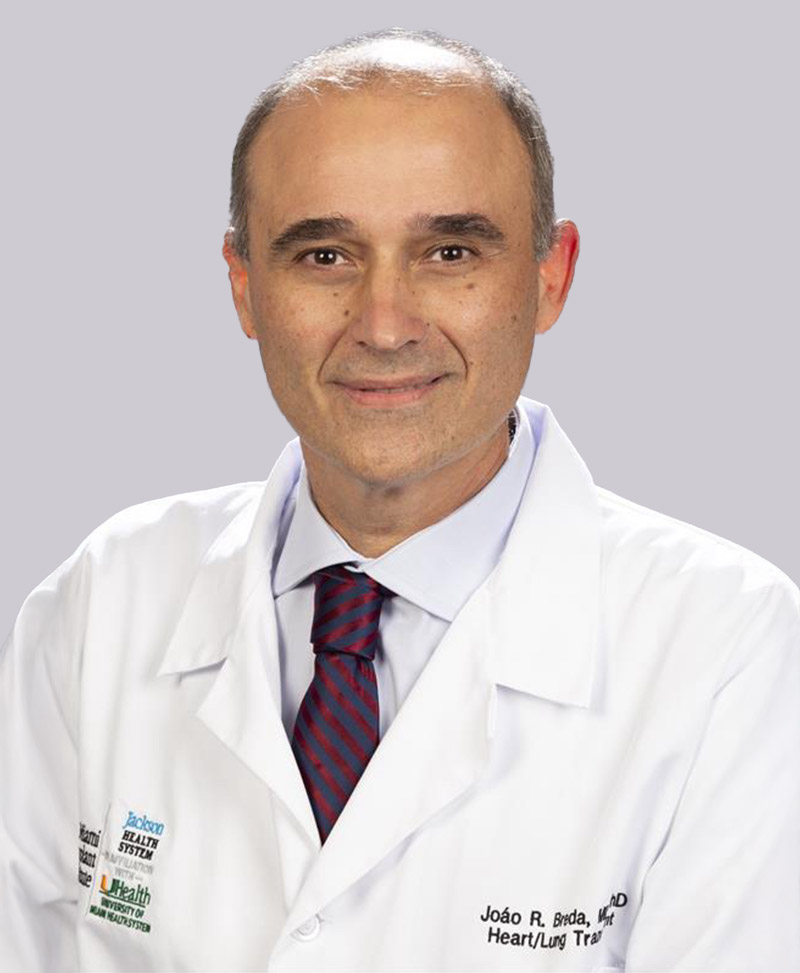
JOAO
ROBERTO BREDA, M.D.
Cardiac Surgeon
Treatments
The UHealth Cardiac Surgery team delivers the full spectrum of advanced care, from minimally invasive procedures to complex heart surgeries and adult congenital treatments, offering leading-edge therapies including:
Adult Congenital Heart Disease Surgery
Some congenital heart defects may not be diagnosed until you are an adult. Our expert cardiothoracic surgeons can repair these heart defects.
Aortic Dissection and Aneurysm Surgery
Our cardiothoracic surgeons perform state-of-the-art, open and endovascular surgeries on the aorta to treat aortic aneurysms (weak spots in the wall of the aorta) and aortic dissections (tears in the internal wall of the aorta).
Cardiac Tumors
Our expert cardiothoracic surgeons use advanced techniques to resect complex cardiac tumors inside the wall of the heart, resect tumors, and reconstruct the heart to restore its function.
Complex Re-operative Surgery
Our expert cardiothoracic surgeons perform complex re-operations on patients who have had previous heart surgery, using advanced techniques to reduce risk and improve outcomes.
Complex Valve Repair and Reconstruction
Our expert cardiothoracic surgeons use advanced techniques to repair and reconstruct heart valves, even in the most difficult cases.
Coronary Artery Bypass Graft
In this surgery, your surgeon takes an artery or vein from another part of your body and grafts (moves) it over a blocked artery in your heart, improving blood flow and preventing a heart attack.
Hybrid Aortic Surgery
Hybrid aortic surgeries use both minimally invasive and open procedures to repair aortic aneurysms, giving high-risk patients more treatment options.
Hybrid Coronary Revascularization
In this specialized procedure, surgeons and interventional cardiologists work together to improve blood flow to the heart using stents (tiny tubes), a minimally invasive procedure, and Coronary Artery Bypass Graft.
Left Ventricular Remodeling
When your left ventricle (a chamber of the heart) is damaged by a health condition, our physicians can use advanced procedures to reshape the ventricle and improve its ability to pump blood.
Mechanical Circulatory Support
If your heart cannot pump blood or you are undergoing a surgery in which your heart must be stopped, we use advanced MCS to keep your blood flowing through your body.
Minimally Invasive Heart Surgery
Our surgeons perform many different minimally invasive heart surgeries that have fewer risks and faster recoveries than open heart surgeries.
Minimally Invasive Mitral Valve Repair
Our surgeons repair damaged mitral valves using small incisions and specialized tools, offering faster recovery and less pain than traditional open-heart surgery.
Myotomy and Myectomy
During these surgical procedures, your cardiothoracic surgeon will remove or cut part of your heart muscle to help improve your heart's ability to pump blood.
Re-operative Aortic Arch Surgery
For patients who require a second surgery involving the aortic arch, our specialists use advanced imaging and surgical methods to safely repair this critical part of the aorta.
Re-operative Aortic, Heart
Because some heart conditions can continue to get worse even after heart surgery, our surgeons provide specialized reoperative (repeat) procedures to improve your quality of life.
Ross Procedure
Also known as pulmonary autograph procedure, this complex surgical technique replaces the stenotic (damaged) aortic valve with the patient's own pulmonary valve, providing a living substitute to the deceased aortic valve. This provides better durability, improved size fitting, and reduced risk of valve deterioration without the need for blood thinners or anticoagulants.
Surgery of the Ascending or Descending Aorta
During minimally invasive endovascular surgeries, our surgeons can repair aneurysms (weak areas) in the walls of the aorta, preventing a life-threatening aneurysm rupture.
Valve Sparing and Replacement
When possible, our surgeons preserve your natural heart valve using advanced repair techniques—or replace it with a durable option to restore healthy blood flow.
Valve Surgery
During valve surgeries, our cardiothoracic surgeons can replace or repair damaged heart valves to improve heart function.
Request an Appointment
Existing patients can schedule an appointment by logging in to
MyUHealth Chart or by calling 305-243-5554.
Existing patients can schedule an appointment by logging in to MyUHealth Chart or by calling 305-243-5554.