
 What to Expect After Surgery
Your catheter
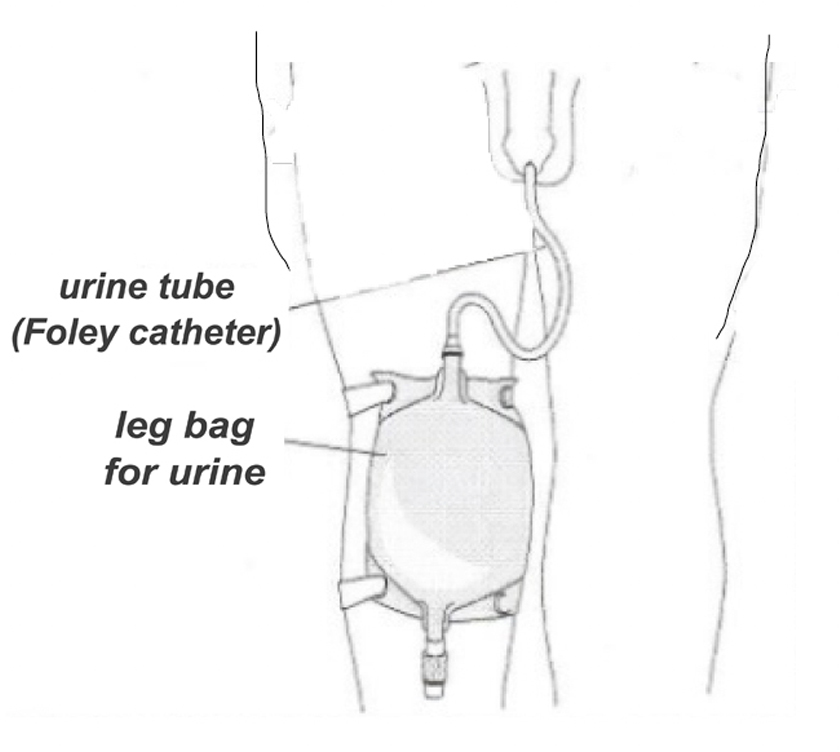
- The catheter drains pee while you heal.
- It stays in for 1-2 weeks.
- You will also have a bag on your leg that collects the pee.
- After we take it out, you should start doing Kegel exercises to help bladder control.
Taking care of your incisions (cuts)
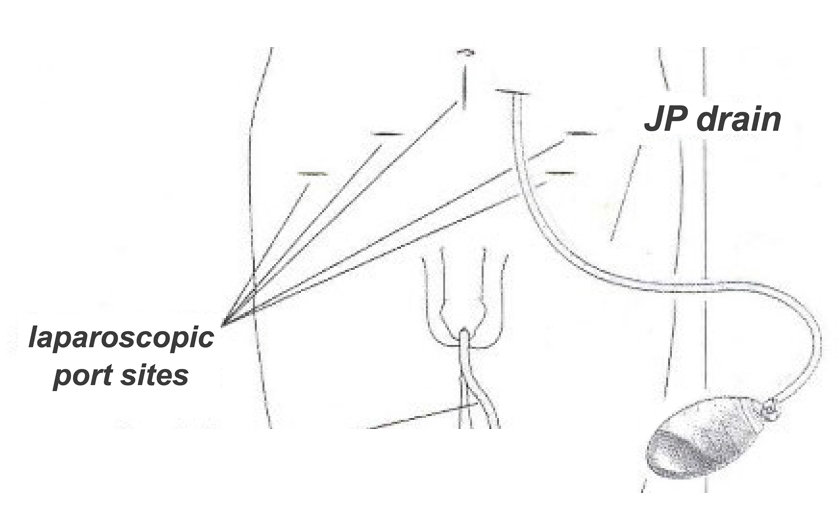
- Wash your hands before and after caring for your incisions.
- Wash the incisions with mild soap and water. Pat dry.
- Use a bandage if it drains or rubs on clothes.
- Change the bandage every day or if it gets wet.
- Do not use lotion or powder.
- Showers are okay. No baths, hot tubs, or saunas for 3 weeks.
- Bruising is normal and will go away.
Taking your medicines
- Take your regular medicines only when your doctor says it is okay.
- For pain, Tylenol® (acetaminophen) may help.
- Some people may need stronger pain medicine.
Do not take these medicines:
- Non steroidal anti-inflammatory medicines (NSAIDs) for 1-2 weeks.
- These include Advil® (ibuprofen) or Aleve® (naproxen).
- These medicines can make you bleed more easily.
Other important steps:
- If you take blood thinners, ask your doctor when you can start them again.
- Start antibiotics 1 day prior your post-op visit.
- Take stool softeners so you do not strain.
- Do not use Metamucil®.

You may have some bleeding
- You may see blood around your catheter if you strain to poop.
- You may see pink pee. This is normal and will clear.
- You may see more if you:
- Exercise.
- Strain when you poop.
- Take aspirin.
- Drink lots of fluids to help.
- Fluids also help prevent blood clots in your catheter.

Common Problems After Surgery
Leaks
- Pee may leak around the catheter when walking or during a bladder spasm.
- You may also see mucus.
- This is normal
Bladder spasms
- You may feel a sudden fullness, pressure, or tenderness in your lower stomach.
- Spasms can happen when you poop.
- If they hurt a lot, call the clinic.
Swelling
- Swelling in your scrotum and the area between your scrotum and anus is normal.
- It usually goes away in 4-6 weeks.

When should you call the clinic?
If you have symptoms of a urinary tract infections (UTI):
- Pain when you pee or peeing often.
- Fever. Call us for fever higher than 100.5 F.
We try to prevent UTIs by sending you home on antibiotics.
- Start your antibiotic 1 day prior your post-op visit.
If you have symptoms of blood clots:
- Watch for blood clots in the first 4-6 weeks after surgery.
- 1-2 out of 100 people may get a blood clot.
- 98 of 100 do not get blood clots.
What should you do if have symptoms of a blood clot?
Call us if you have:
- Pain or swelling in your calf, ankle, or leg.
Call 911 if you have:
- Chest pain
- Coughing up blood
- Trouble breathing
- Sudden weakness
- Fainting

How can you prevent problems?
- Check your temperature 2-3 times a day. Call us if it is over 100.5°F.
- Check your catheter bag often to make sure it is draining.
- If it is not draining, you may feel full or have a strong urge to pee that does not go away.
- Secure your catheter tube to your leg.
- This helps keep it in place and makes it less painful.
- Your nurse will teach you how to care for yourself and your catheter.
- Follow the steps they review to stay safe.
- They will also give you supplies.

What should you eat and drink?
- Eat 5-6 small meals a day at first.
- Choose foods that are easy to digest like soups, pastas, and rice.
- Eat fruits and veggies to help you poop easily.
- Drink 10-12 glasses of fluid every day while you have the catheter.
Good choices are water, tea, juice, coffee, soda.
- Do not drink alcohol if you are taking strong pain medicines (narcotics).

When can you start activities after surgery?
Healing takes time.
Your body needs at least 6 weeks to make strong scar tissue in your wound and the areas touched by surgery.
Why you should take it easy?
If you do too much before 6 weeks:
- You can harm the spot that joins your bladder and the tube that carries your pee out of your body (urethra).
- This can cause long-term problems with bladder control.
- You can also get a hernia (a bulge) at your incision.

What can you do while you heal?
- Rest when you are tired.
- Sit in a soft chair, recliner, or sofa. Use a footstool if you can.
- Take short walks often during the day.
- You can climb stairs, but not for exercise.
- Lift items that weigh less than 20 pounds.
- Do light exercises like walking and Kegel exercises.
What shouldn't you do while you heal?
| Weeks | Exercise and activities to avoid |
|---|---|
| For 2-3 weeks: | Do not drive. After 2-3 weeks you can drive if you are not taking narcotics for pain, such as opioids - oxycodone. |
| For 4 weeks: | Do not sit upright in a firm chair for more than 1 hour. |
| For 4-6 weeks: | Do not lift anything that weighs more than 20 pounds. Do not strain while you poop. |
| For 6 weeks: | Do not swim, jog, run, golf, play tennis, walk fast or have sex. Do not sit on hard surfaces or use “donut” cushions. |
| For 6-8 weeks | Do not do sit-ups, pull ups, or dips. Do not put anything in your anus such as enemas or suppositories. |
| For 8 weeks: | Do not bike. |

When will you be able to control your bladder?
It is common to leak pee after we remove your catheter. Everyone is different, so we can't say exactly when you will be able to stay dry again.
Your bladder control comes back slowly:
- Phase I: You will stay dry while lying down at night.
- Phase II: You stay dry when walking around during the day.
- Phase III: You stay dry when you stand up from sitting. This is the last to return.

How can you improve bladder control?
You can do pelvic floor exercises called Kegel exercises (Kegels).
These exercises make the muscles around your bladder stronger.
Strong muscles help you stay dry.
How can you find the right muscles?
- Tighten your bottom as if you are trying not to pass gas or not to poop.
- Imagine you are stopping the flow of pee.
- Do not stop your pee when you go to the bathroom.
- Do not tighten your stomach, legs, or buttocks.

When can you do Kegels?
- You can do Kegels anytime and anywhere.
- Do them while sitting, standing, or lying down.
- Practice them before surgery and keep doing them after.

How do you do Kegel (Pelvic Floor) Exercises?
- Tighten muscles like you are stopping pee or gas.
- Breathe normally. Do not hold your breath.
- Relax the muscles.
- You will notice you have more control as you follow the plan below.
- You may notice that you can control your bladder better in the morning.
- As you get stronger your goal is to be able to hold your muscles for 10 seconds.

Weekly Kegel Plan
| Week after Surgery | How long should you tighten your muscles? | How long should you relax? |
|---|---|---|
| Week 1 | 2-3 seconds | 2-3 seconds |
| Week 2 (After we take your catheter out) |
4 seconds | 4 seconds |
| Week 3 | 5-10 seconds | 5-10 seconds |
| After the 3rd week | Each week, increase how long you tighten until you can hold for 10 seconds. | 10 seconds |
| Note: Do 10-20 times, 5-6 times a day with a goal of at least 100 Kegels per day. | ||

What should you know about having sex after surgery?
- After surgery, your body needs time to heal. Everyone heals at their own speed.
- Your age and your health before surgery can affect healing.
- Erections may not come back right away. We call this Erectile Dysfunction (ED) This is normal.
- It will get better each month.
- Be patient. It may take many months to 2 years for erections to fully return.
- You do not need to wait for the "perfect erection" to try having sex.
- When you have an orgasm, you will not have semen. This is normal.
- You may leak pee when you have an orgasm. This is normal and will improve over time.
Talk with your care team.
- They can help you make a plan to heal.
- They will talk to you about medicines and devices that help with erections and keep your penis healthy.
- It helps to involve your partner in these talks.
- Call the clinic if you have questions or worries. We are here to help.

What happens at your follow-up visit?
Your visit will be 1-2 weeks after surgery.
At your visit:
- We will do a test to make sure you can pee okay (voiding trial).
- We will remove your catheter
- We will review your final lab results.
- We will talk about sex and erections.
- We will talk about medicines that may help like: Viagra®, Cialis®, Levitra®.
Bring Adult pads or briefs (diapers) with you
- We may take out your catheter at this visit.
- You may leak pee when it comes out.
Contact Information:
Phone: 305-243-6090
Address for your surgery:
UHealth Tower
1400 NW 12th Ave
Miami, FL 33136
Post-Op Appointment Information:
The date, time, and location of your post-operative appointment may vary depending on your physician and clinic location. Your Surgical Scheduler will provide you with these details.
...