UNIVERSITY OF MIAMI SCIENTISTS TURN TO THE OCEAN
TO ANSWER HUMANITY’S TOUGHEST HEALTH CHALLENGES.
Imagine if the next breakthrough in Alzheimer’s or cancer didn’t come from a sterile lab but from the ocean’s living library.
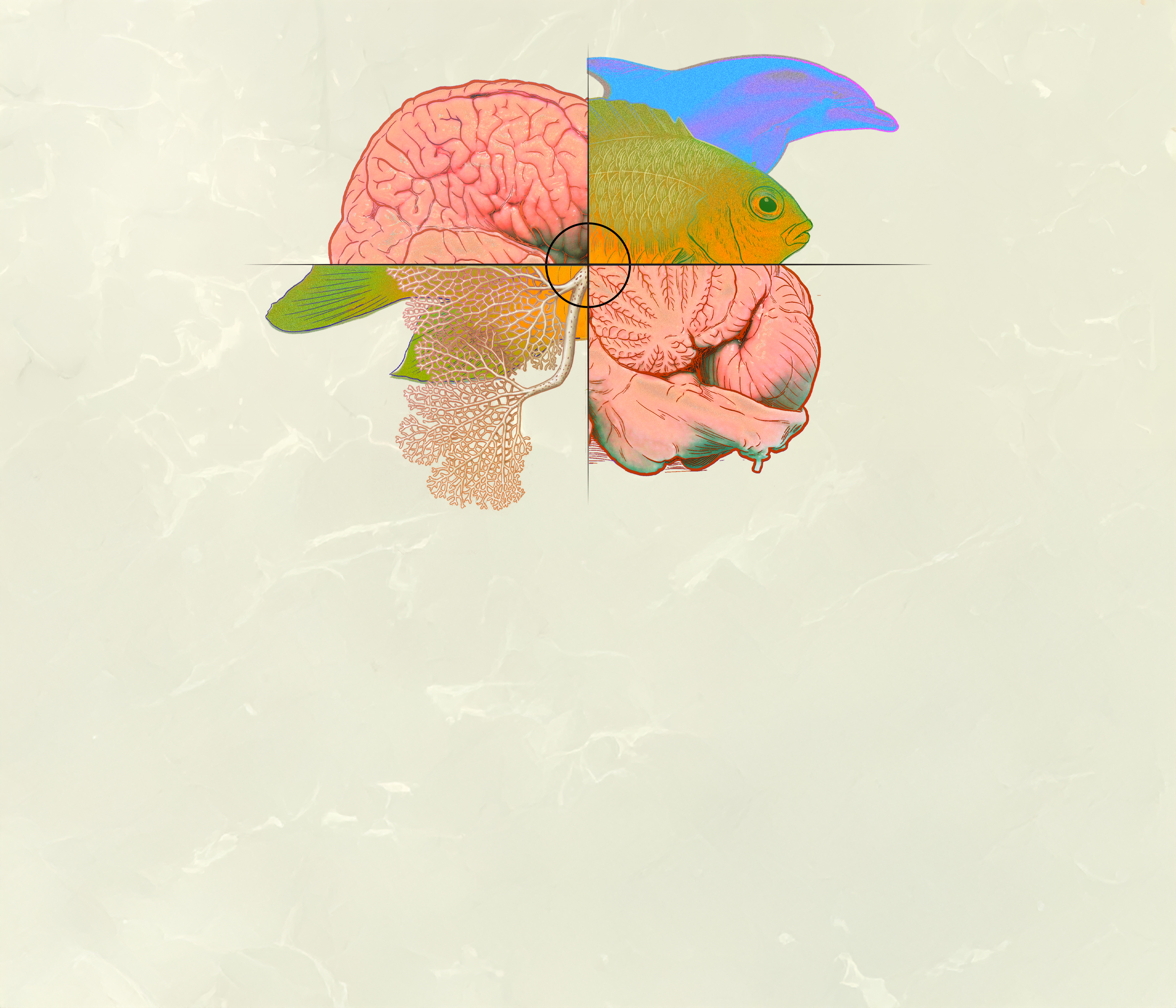
At the University of Miami Health System (UHealth), that vision is reality—where discoveries from the sea are being translated into therapies for patients. Dolphins, damselfish, even sea slugs are not just marine curiosities; they are molecular storytellers, whispering clues about human disease in ways traditional models cannot.
Because of Miami’s coastal environment and the University’s integrated ecosystem of clinicians, marine scientists and public health researchers, UHealth is pursuing questions that few academic health systems can. These collaborations are not theoretical. They are already reshaping how we understand—and may one day prevent—some of the world’s most urgent diseases.
What dolphins teach us about dementia
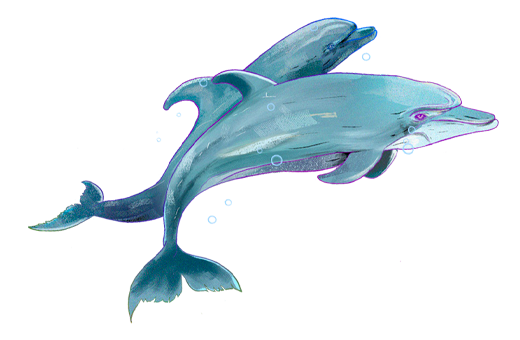
Collaborations among University of Miami’s Rosenstiel School of Marine, Atmospheric and Earth Science, Sylvester Comprehensive Cancer Center and the Miller School of Medicine have revealed a surprising ally in the fight against neurodegenerative disease: the dolphins swimming in the same waters as Miami’s coastal communities.
Highly intelligent and vulnerable to the same environmental toxins we are, dolphins develop age-related pathology in their brain similar to humans. Recent UHealth research found stranded dolphins along Florida’s coast showed hallmark signs of Alzheimer’s-like neurodegeneration linked to harmful algal blooms. The same neurotoxins from these blooms were detected directly in their brains.
“Dolphins are nature’s early warning system for the brain—showing us how environmental stressors can quietly set neurodegeneration in motion,” said David Davis, Ph.D., a neurotoxicologist and associate director of the Brain Endowment Bank™, a National Institutes of Health (NIH) NeuroBioBank, one of seven designated brain and tissue biorepositories in the nation.
These findings ripple beyond marine biology. Algal toxins can become airborne, raising concerns about human exposure. By studying dolphins, a natural model of marine toxin exposure and brain aging, UHealth researchers are informing dementia science and shaping preventive strategies that could influence future clinical protocols for Alzheimer’s disease.
Where you live can determine your cancer risk
Sylvester Comprehensive Cancer Center epidemiologists are uncovering how toxic exposures shape cancer risk in ways that hit close to home, including hazardous substances from National Priorities List (Superfund) sites that may seep into groundwater and flow into local waterways, contaminating air, lakes, the bay and Florida’s Biscayne Aquifer. Erin Kobetz, Ph.D., M.P.H., and her team found that women living near National Priorities List (Superfund) sites had a 30% higher likelihood of triple-negative breast cancer. That risk more than doubled among women living close to Superfund sites with high particulate matter exposure.
“Interdisciplinary, community-based science is essential. Our collaboration with atmospheric scientists focuses on partnering with communities to understand differences in cancer burden and to use that evidence to drive public health actions that can make a measurable difference,” said Dr. Kobetz.
“Our teams are already converting discoveries from the ocean into disease prevention strategies, diagnostic signals and therapeutic treatments.”
Tumors in Damselfish defy conventional wisdom
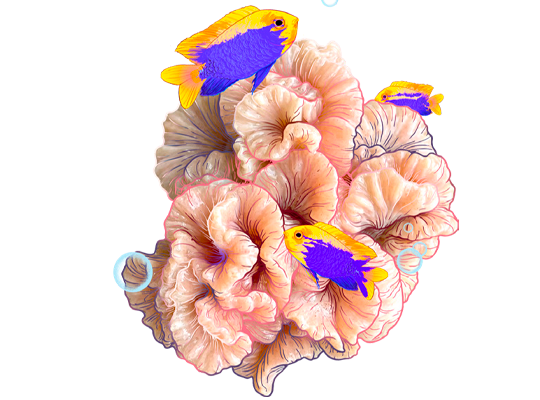
Just offshore, another story unfolds in the cells of a tiny tropical fish more numerous than the palm trees on Ocean Drive. At the Rosenstiel School’s Glassell Family Center for Marine Biomedicine, marine biologist Michael Schmale, Ph.D., and Sylvester researcher David Lombard, M.D., Ph.D., are studying damselfish tumors that defy conventional wisdom: their mitochondrial metabolism is suppressed, not accelerated.
This unexpected twist may expose new therapeutic vulnerabilities.
“We’re constantly looking for new Achilles’ heels and new therapeutic vulnerabilities for cancer treatment,” Dr. Lombard stated. He noted that today, science has become so specialized that advances require teams of people with complementary expertise.
These insights feed directly into UHealth’s translational engine—connecting marine biology to precision oncology.
Sea Slugs, Anemones and Cobia expand the toolkit
The University of Miami’s marine biomedical leadership extends far beyond fish and dolphins. In Florida, there is a vast arsenal of species that are helping find cures for a range of diseases beyond cancer.
As home to the NIH-funded National Aplysia Resource, the University of Miami Rosenstiel School is the only place in the world where Aplysia californica — the sea slug central to Nobel Prize–winning research on memory — is cultured throughout its life cycle for research and teaching. This organism now informs studies in Alzheimer’s disease, stroke survival, and sleep apnea.
Studies on anemones, which regenerate without leaving scars, are inspiring burn and wound-healing treatments. Cobia’s high lipid content—ideal for those recovering from cancer treatment—is being explored.
Diving in First
“The early signals are strong. Our charge now is to turn them into validated diagnostics, smarter prevention and targeted therapies that change outcomes,” said Dipen J. Parekh, M.D., chief executive officer, University of Miami Health System. “We’re expanding this work across neurology, oncology and population health, with a focus on studies that can quickly inform clinical protocols and community policy.”
From dolphins to damselfish, University of Miami Health System and Miller School scientists are proving that answers to humanity’s toughest health challenges may be swimming beneath the waves—or drifting in the air we breathe. These ocean-informed breakthroughs are only beginning, and Miami is uniquely positioned to dive in first, carrying discoveries from sea to clinic and ultimately to the patients who need them most.