Skip to Main Content
  • Sylvester Comprehensive Cancer Center |
  • Bascom Palmer Eye Institute

Expert Heart Valve Surgery

University of Miami Health
  • Appointments
  • Pay a Bill
  • Refer a Patient
  • International Patients
  • Donate Now
  • Search
  • Patient Login
  • Find a Doctor
  • Treatments Page 1
    Featured Treatments For
    • Allergy and Immunology
    • Arthritis (Rheumatology)
    • Bariatrics (Weight Loss Surgery)
    • Cancer (Oncology)
    • Cardiac and Vascular
    • Concierge Medicine
    • Dentistry
    • Dermatology
    • Diabetes
    • Ear, Nose, and Throat (ENT)
    • Emergency Care
    • Endocrinology, Diabetes and Metabolism
    • Executive Physicals
    • Eye Care (Ophthalmology)
    • Fertility Center
    • Gastrointestinal
    • Genetics
    • Geriatrics
    • Hepatology
    • High Blood Pressure (Hypertension)
    • Hyperbaric Oxygen Therapy
    • Infectious Diseases
    • Internal Medicine
    • Interventional Radiology
    • Lymphedema
    • Nephrology
    • Neurology
    • Neurosurgery
    • Obstetrics and Gynecology
    • Orthopaedics
    • Pain Management and Palliative Care
    • Pediatrics
    • Physical and Occupational Therapy
    • Physical Medicine and Rehabilitation
    • Plastic Surgery
    • Primary Care
    • Psychiatry
    • Pulmonary Medicine
    • Radiology
    • Sleep Medicine
    • Sports Medicine Institute
    • Surgery
    • Transplant
    • UHealth Comprehensive Women’s Health Alliance
    • UHealth Premier
    • Urology
    View all Treatments
    Browse A-Z A B C D E F G H I J K L M N O P Q R S T U V W X Y Z
    Featured Treatments For
    • Allergy and Immunology
    • Arthritis (Rheumatology)
    • Bariatrics (Weight Loss Surgery)
    • Cancer (Oncology)
    • Cardiac and Vascular
    • Concierge Medicine
    • Dentistry
    • Dermatology
    • Diabetes
    • Ear, Nose, and Throat (ENT)
    • Emergency Care
    • Endocrinology, Diabetes and Metabolism
    • Executive Physicals
    • Eye Care (Ophthalmology)
    • Fertility Center
    • Gastrointestinal
    • Genetics
    • Geriatrics
    • Hepatology
    • High Blood Pressure (Hypertension)
    • Hyperbaric Oxygen Therapy
    • Infectious Diseases
    • Internal Medicine
    • Interventional Radiology
    • Lymphedema
    • Nephrology
    • Neurology
    • Neurosurgery
    • Obstetrics and Gynecology
    • Orthopaedics
    • Pain Management and Palliative Care
    • Pediatrics
    • Physical and Occupational Therapy
    • Physical Medicine and Rehabilitation
    • Plastic Surgery
    • Primary Care
    • Psychiatry
    • Pulmonary Medicine
    • Radiology
    • Sleep Medicine
    • Sports Medicine Institute
    • Surgery
    • Transplant
    • UHealth Comprehensive Women’s Health Alliance
    • UHealth Premier
    • Urology
    View all Treatments
  • Locations
  • Patients & Families
    Quick links
    • Appointments
    • Pay a Bill
    • Make a Gift
    • Insurance Plans Accepted
    • MyUHealthChart
    • Advance Directives
    For Patients & Families
    • Your First Visit
    • Medical Records
    • Frequently Asked Questions
    • Patients & Families
    • Public Transportation
    • UHealth Clinic at Walgreens
    • Classes & Events
    • Support Groups
    • Interpreter Services
    • International Patients
    • UMiami Health Talks
    About Uhealth
    • Why Choose UHealth
    • Benefits of an Academic Medical Center
    • Mission & Values
    • Leadership
    • Community Health Improvement
    • Nursing at UHealth
    • Health News
    • Miller School of Medicine
    • University of Miami
    • Careers
    • Volunteers
    • Contact Us
    Clinical Trials
    • Find a Clinical Trial
    • Understanding Clinical Trials
    • Clinical Trials FAQ's
    Traveling from overseas?
    We can help plan your visit. Learn More
    Quick links
    • Appointments
    • Pay a Bill
    • Make a Gift
    • Insurance Plans Accepted
    • MyUHealthChart
    • Advance Directives
    For Patients & Families
    • Your First Visit
    • Medical Records
    • Frequently Asked Questions
    • Patients & Families
    • Public Transportation
    • UHealth Clinic at Walgreens
    • Classes & Events
    • Support Groups
    • Interpreter Services
    • International Patients
    • UMiami Health Talks
    About Uhealth
    • Why Choose UHealth
    • Benefits of an Academic Medical Center
    • Mission & Values
    • Leadership
    • Community Health Improvement
    • Nursing at UHealth
    • Health News
    • Miller School of Medicine
    • University of Miami
    • Careers
    • Volunteers
    • Contact Us
    Clinical Trials
    • Find a Clinical Trial
    • Understanding Clinical Trials
    • Clinical Trials FAQ's
Patient Login

Expert Heart Valve Surgery

Doctors Doctors Locations Locations Clinical Trials Clinical Trials

Appointments

Call or click for an in-person
or virtual visit.

Call us at
305-689-2784

Or

Insurance Plans

View a list of insurance plans accepted at the University of Miami Health System.

When it comes to heart valve surgery, choosing the right method is crucial. Our expert cardiac surgeons, recognized across the country, utilize cutting-edge techniques such as minimally invasive and robotic-assisted procedures to effectively address valve problems and enhance patients' quality of life.


What Is Heart Valve Surgery?

Your heart has four valves—the aortic, mitral, pulmonary, and tricuspid—that act like one-way doors to keep blood moving in the right direction. Surgery restores proper flow when a valve is narrowed (stenosis) or leaky (regurgitation). Depending on your condition, your surgeon may repair your native valve or replace it with a mechanical or biological valve.


Who Benefits from Heart Valve Surgery?

You may be a candidate if you have moderate-to-severe stenosis or regurgitation with symptoms—such as shortness of breath, fatigue, chest pressure, dizziness/fainting, swelling—or evidence of heart strain on testing. Your cardiologist will evaluate your history, exam, and imaging (especially echocardiogram) to determine whether repair, replacement, or a transcatheter option is best.


Heart Valve Treatments

Mitral Valve Repair

Whenever feasible, we reconstruct your natural mitral valve to restore function. Techniques such as annuloplasty (reinforcing the valve ring) and leaflet/chordal repair address regurgitation while preserving native tissue. At experienced centers, most degenerative mitral valves can be repaired with excellent long-term results.

Aortic Valve Repair or Replacement

For aortic valve disease, options include carefully selected repairs or replacement with a mechanical or biological valve. Your surgeon will discuss durability, anticoagulation, and lifestyle considerations to help you choose the right path.

Minimally Invasive and Robotic Approaches

When appropriate, our surgeons use small intercostal incisions and wristed, 3-D robotic instruments to reach the valve through tiny access points—often reducing pain, scarring, and recovery time compared with full sternotomy.

Transcatheter Aortic Valve Replacement (TAVR)

For eligible patients with aortic stenosis, TAVR places a new valve through a catheter—typically via an artery in the groin—without a large chest incision. Your heart team will determine candidacy based on anatomy and overall risk.

Transcatheter Mitral Repair

For select patients with significant mitral regurgitation who are not ideal candidates for surgery, transcatheter edge‑to‑edge repair (TEER)—often performed with a clip device—can reduce leaking without opening the chest.

Your team will evaluate anatomy and overall risk to determine whether TEER or surgical repair offers the best long‑term result.

Complex Valve Repair and Reconstruction

When a valve problem is especially challenging, our surgeons use advanced techniques to preserve your own valve whenever possible. Depending on your anatomy, this may include leaflet reshaping or patching, chordal repair/replacement, commissuroplasty, or re-repair after prior surgery. A successful repair can protect heart function, reduce complications, and avoid or delay valve replacement.

Ross Procedure (Pulmonary Autograft)

For select younger, active patients with severe aortic valve disease, the Ross procedure replaces the diseased aortic valve with the patient's own pulmonary valve (a living valve), and then replaces the pulmonary position with a donor graft.

Potential advantages include excellent blood‑flow dynamics and no need for lifelong blood thinners. Because it involves two valves, careful evaluation and long‑term follow‑up are essential; we'll help you decide if this option fits your goals and lifestyle.

Valve-Sparing Aortic Root Replacement

When the aortic root is enlarged but the valve leaflets are healthy, valve‑sparing aortic root replacement can preserve your native aortic valve while replacing the weakened root. This approach maintains natural valve function and may avoid lifelong anticoagulation. It's often considered for patients with root aneurysms, including some with connective‑tissue conditions.


How to Prepare for Heart Valve Surgery

  • Pre-op testing: echocardiogram, CT or MRI as needed, and routine labs
  • Medication guidance: temporary adjustments to blood thinners or other medicines
  • Lifestyle steps: stop smoking, optimize blood pressure, follow pre-op nutrition instructions
  • What to bring: loose-fitting clothes for discharge, personal toiletries, a list of medications, photo ID and insurance card

What to Expect on Surgery Day

  • General anesthesia and continuous monitoring by your care team
  • Small side incisions for minimally invasive/robotic approaches—or a larger incision when required
  • Use of a heart-lung machine when needed to support circulation
  • Incisions closed and dressings placed; you'll transfer to the ICU for close monitoring

Recovery in the Hospital

  • ICU: typically 1–2 days for monitoring rhythm, oxygen levels, and pain control
  • Step-down and discharge: early walking and breathing exercises; most patients with minimally invasive approaches discharge in several days

Recovery After Discharge

Your exact timeline depends on procedure type and your overall health. Cardiac rehabilitation supports a safe, steady return to activity and long-term heart health.

Recovery Timeline (Typical)

  • Week 1: ICU → step-down; early ambulation; incision care; pain and blood-pressure control
  • Weeks 2–4: many desk-job patients resume light work and daily activities when cleared; no heavy lifting
  • Weeks 6–12: progressive return to full activity; cardiac rehab sessions as advised by your team

This timeline can vary depending on the specific procedure and individual health history. Every patient is unique, and some may experience faster or slower healing based on their health, age, and other variables.


Risks and How We Lower Them

  • Bleeding or infection—mitigated by meticulous technique and standardized prevention protocols
  • Irregular heart rhythms (arrhythmias)—managed with monitoring and medications as needed
  • Blood clots or stroke—reduced with appropriate anticoagulation and early mobilization
  • Anesthesia-related risks—addressed by specialized cardiac anesthesia teams

Frequently Asked Questions

How long does a new heart valve last? Page 1

Mechanical valves are designed for long-term durability and typically last the longest, but require lifelong blood thinners. Biological valves often last many years and usually do not require lifelong anticoagulation; they may eventually need replacement.

Will I need to take blood thinners after valve surgery? Page 1

If you receive a mechanical valve, lifelong anticoagulation is standard. Biological valves may require only short-term blood thinners unless another condition (such as atrial fibrillation) exists. Your team will personalize recommendations.

What is the difference between valve repair and valve replacement? Page 1

Repair preserves your own valve and is preferred when feasible. Replacement removes the diseased valve and implants a mechanical or biological valve. The best choice depends on your anatomy, disease severity, and goals.

Is there a catheter-based option for mitral valve regurgitation if I can't have surgery? Page 1

Yes. Transcatheter mitral repair (TEER) can reduce mitral leaking without opening the chest for select patients. Your team will review imaging and overall health to determine whether TEER or surgical repair offers the best long-term result.

When can I drive or return to work after minimally invasive surgery? Page 1

Many patients with desk jobs resume light work in 2–4 weeks, with timing individualized by your surgeon. Driving typically resumes when you are off narcotic pain medicines and can turn safely—your team will advise you.

Our Location

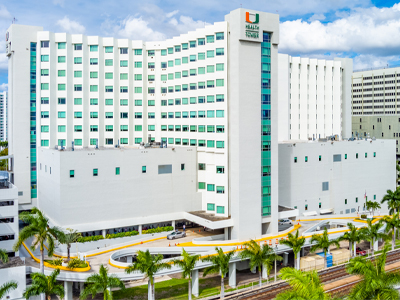
UHealth Tower Location

Cardiac Surgery at UHealth Tower
1400 Northwest 12th Avenue, Suite 1
Miami, FL 33136
Get Directions


Our Experts


Why Choose UHealth for Valve Surgery?

Repair-First Expertise. We design your plan to preserve your native valve whenever it's safe and durable.

Depth in Minimally Invasive and Robotic Surgery. More patients eligible for small-incision approaches when appropriate.

Full-Spectrum Program. Surgical repair/replacement, TAVR, TEER, reoperations, and complex reconstructions (Ross, valve-sparing root).

Seamless Care Pathway. Fast evaluation, clear plans, coordinated surgery, cardiac rehab, and structured follow-up.

Academic Excellence and Recognized Quality. Part of the University of Miami Miller School of Medicine with national recognition for mitral repair.

Questions? We're here to help.

Our appointment specialists are ready to help you find what you need. Contact us today.

Call 305-689-2784 Request an Appointment

logo
alt="Twitter Logo">
USNWR Best Hospitals 2025-2026 USNWR Best Regional Hospitals 2025-2026
Quick links
  • Appointments
  • Find a Doctor
  • Pay a Bill
  • Insurance Plans Accepted
  • MyUHealthChart
  • Make a Gift
Patient & Families
  • Frequently Asked Questions
  • Medical Records
  • Interpreter Services
  • Clinical Trials
  • International Patients
  • UHealth Clinic at Walgreens
  • Support Groups
  • Price Transparency
  • Florida Health Finder
Healthcare Professionals
  • Refer a Patient
  • Physician & Executive Recruitment
  • Advanced Practice Providers
  • Immunology & Histocompatibility Laboratory
  • Nursing
  • Sleep Center
  • Sports Medicine Institute
  • Pathology Reference Services
About Uhealth
  • Why Choose UHealth
  • Benefits of an Academic Medical Center
  • Mission & Values
  • Leadership
  • Community Health Improvement
  • For Media
  • Miller School of Medicine
  • University of Miami
  • Careers
  • Volunteers
  • Supply Chain
  • Contact Us

University of Miami Centennial Logo

Medical Disclaimer | Terms of Use | Privacy Statement | HIPAA Notice of Privacy Practices | Non-Discrimination Policy | No Surprises Billing Rights
© 2025 University of Miami Health System. All rights reserved.