An aortic aneurysm is a potentially life-threatening condition in which the aorta (the body's largest artery) becomes weakened and begins to bulge. These aneurysms often grow without symptoms and may go undetected until they become large or begin to rupture. If untreated, an aortic aneurysm can lead to dissection (a tear in the inner wall) or rupture, both of which require emergency care.
At UHealth – University of Miami Health System, patients with aortic aneurysms receive care from a multidisciplinary team of vascular and cardiothoracic surgeons. Our team offers rapid imaging diagnostics, minimally invasive endovascular repair, and complex open surgery when needed. We also provide lifelong monitoring to help prevent future complications. As South Florida's only academic-based health system, UHealth combines surgical expertise with leading-edge research to deliver safe, effective aneurysm care.
Abdominal Aortic Aneurysm (AAA) vs. "Aortic Aneurysm": What's the Difference?
"Aortic aneurysm" is a broad term for a bulge in any part of the aorta, your body's main artery. An abdominal aortic aneurysm (AAA) is one specific type—located in the part of the aorta that runs through your belly. Location matters because it changes symptoms, how we find it, and the best way to repair it.
| Abdominal Aortic Aneurysm (AAA) | Thoracic Aortic Aneurysm (TAA) | |
|---|---|---|
| Where it happens | Abdominal aorta (belly area) | Thoracic aorta (chest area) |
| How it's often found | Screening ultrasound in people at risk; sometimes CT done for another reason | CT/MRI or echocardiogram done for chest concerns or family/genetic screening |
| Typical symptoms (if any) | Usually silent; may feel a pulsing near the navel or deep back/side pain when large | Often silent; when present: chest/back pain, hoarseness, trouble swallowing/cough |
| First-line imaging | Abdominal ultrasound for screening; CT for planning | CT angiography or MRI; echocardiogram can help near the heart |
| Common repairs | EVAR (endovascular stent-graft) when anatomy fits; open surgery if not | TEVAR (thoracic endovascular stent-graft) when appropriate; open surgery for certain anatomies |
| Follow-up | Lifelong surveillance after EVAR or open repair (ultrasound/CT at set intervals) | Lifelong surveillance after TEVAR or open repair (CT/MRI at set intervals) |
Aortic Aneurysm Risk Factors
- Atherosclerosis (plaque buildup) that weakens the vessel wall
- High blood pressure and high cholesterol
- Smoking (major risk for growth and rupture)
- Age (more common over 65) and male sex
- Family history/genetic conditions (e.g., Marfan, Loeys‑Dietz, Ehlers‑Danlos)
- Inflammation or infection of the aorta (rare)
- Trauma to the chest or abdomen
Symptoms of an Aortic Aneurysm
Most aneurysms cause no symptoms until they enlarge or complications are imminent. Possible signs include:
- AAA: pulsating feeling near the navel; deep, constant abdominal or back pain
- TAA: chest, back, or jaw pain; hoarseness, cough, trouble swallowing or breathing
Warning Signs of Impending Dissection or Rupture
If an aortic aneurysm is about to dissect or rupture, certain symptoms may suddenly appear and require immediate medical attention. These warning signs can include:
- Sudden, severe, and tearing pain
- Dizziness or weakness
- Rapid pulse
- Low blood pressure
If any of these symptoms occur, it is critical to call 911 right away, as prompt emergency care is essential.
How Do Doctors Diagnose an Aortic Aneurysm?
- Physical exam (AAA may feel like a pulsating mass)
- Screening ultrasound for higher‑risk groups (e.g., select men ages 65–75 with a smoking history)
- Ultrasound to screen/monitor AAA
- CT angiography for precise measurements and treatment planning
- MRI/MRA as an alternative when contrast or radiation is a concern
- Echocardiogram for ascending aorta near the heart
UHealth specialists interpret your imaging and recommend monitoring or repair based on size, growth rate, location, symptoms, and overall risk.
How We Treat Aortic Aneurysms
Endovascular Aneurysm Repair (EVAR)
Minimally invasive repair for many abdominal aneurysms. Through small groin incisions, a stent graft is delivered inside the aorta to reinforce the weak segment and redirect blood flow.
Advantages may include smaller incisions, less blood loss, less pain, shorter hospital stay, and faster recovery when appropriate.
Thoracic Endovascular Aortic Repair (TEVAR)
A minimally invasive approach for many thoracic aneurysms. A stent graft is placed within the thoracic aorta to exclude the aneurysm from blood flow.
Open Surgical Repair
Traditional, durable repair through a larger incision in the abdomen or chest. The weakened segment is replaced with a synthetic graft when endovascular repair isn't appropriate or for complex anatomy.
Hybrid & Complex Aortic Surgery
For select thoracoabdominal or otherwise complex aneurysms, surgeons may combine open 'debranching' of vessels with staged endovascular repair to achieve the safest, most durable result.
Who Benefits from Surgical Aortic Aneurysm Treatment?
Some aneurysms are safest to monitor with regular imaging and blood‑pressure control; others require repair. The decision depends on aneurysm size, rate of growth, location (AAA, TAA, TAAA), symptoms, overall health, and anatomy. Eligibility for endovascular approaches (EVAR/TEVAR) depends on specific anatomical features that allow secure device placement.
What to Expect: From Evaluation to Procedure
- Pre‑op planning: imaging review, anesthesia and medical clearance, medication guidance
- Procedure day: general anesthesia; endovascular access via groin incisions (EVAR/TEVAR) or chest/abdominal incision for open repair
- Immediate recovery: close monitoring of blood pressure, kidney function, and pain control
Recovery Timeline (Typical)
- EVAR/TEVAR: hospital stay is often 1–3 days; walking begins early; many return to light activity within 1–2 weeks
- Open repair: hospital stay is often 5–10 days; activity increases gradually at home; many return to light activity in 2–4 weeks with fuller recovery over 6–12+ weeks.
This timeline is intended for general informational purposes; your surgeon will provide you with a personalized recovery plan.
Frequently Asked Questions About Aortic Aneurysms
Our Location
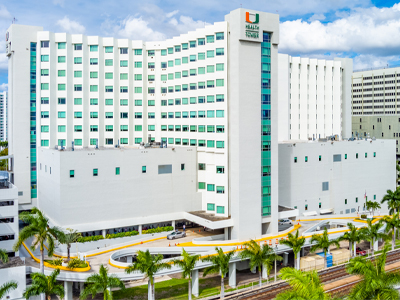
Cardiac Surgery at UHealth Tower
1400 Northwest 12th Avenue, Suite 1
Miami, FL 33136
Get Directions


Why Choose UHealth for Aortic Aneurysm Care?
High‑Volume, Multidisciplinary Aortic Program. Coordinated care by board‑certified surgeons with specialized expertise in complex aortic disease.
Advanced Minimally Invasive Options. Access to EVAR/TEVAR and complex open/hybrid capabilities tailored to your unique anatomy and condition.
Cutting-Edge Facilities. Procedures are performed in hybrid operating rooms with integrated advanced imaging for maximum precision and safety.
Research-Driven Care. Access to research and clinical trials through the University of Miami Miller School of Medicine, ensuring your care is informed by the latest evidence and innovations in aortic disease management.
Comprehensive, Patient‑Centered Care. Lifelong support from diagnosis through long‑term surveillance to optimize your outcomes and quality of life.
Questions? We're here to help.
Our appointment specialists are ready to help you find what you need. Contact us today.