
Coronary artery bypass graft (CABG) surgery is a common and proven treatment for severe coronary artery disease. Also called heart bypass surgery, CABG improves blood flow to the heart by creating new routes around narrowed or blocked arteries using healthy blood vessels from your body.
At UHealth – University of Miami Health System, our expert cardiac surgeons perform both traditional CABG and Hybrid Coronary Revascularization (HCR). This advanced technique combines bypass surgery with stenting, offering long-term results with a less invasive recovery. Our collaborative surgical and interventional cardiology teams customize your treatment to ensure faster healing and optimal heart function.
What Is Coronary Bypass Surgery?
CABG restores blood flow to the heart muscle by bypassing blocked coronary arteries. Surgeons use grafts from your chest (internal mammary artery), leg (saphenous vein), or arm (radial artery) to create new pathways for blood to reach the heart.
This procedure can:
- Relieve chest pain (angina)
- Improve exercise tolerance
- Reduce the risk of heart attack
- Increase life expectancy in certain patients
Who Needs CABG?
CABG is typically recommended for patients with severe or complex coronary artery disease (CAD). You may be a candidate if you have:
- Multiple blocked arteries (multivessel disease)
- Blockage in the left main coronary artery, which supplies most of the heart muscle
- Persistent angina (chest pain) or shortness of breath despite medication or stents
- Diabetes combined with severe blockages, where CABG often provides better long-term survival than stenting
- Poor results or complications from prior angioplasty or stent placement
Your UHealth cardiologist will order tests such as an angiogram, stress test, echocardiogram, or CT scan to determine the severity of blockages and whether CABG is the safest and most effective treatment.
What to Expect
Before Surgery
- You will meet with your surgical team, undergo imaging and lab tests, and review your medications.
- Some medicines (such as blood thinners) may need to be stopped temporarily.
- An anesthesiologist will explain the anesthesia plan.
During Surgery
- CABG is performed under general anesthesia.
- Surgeons make an incision in the chest to access the heart.
- Healthy vessels (grafts) are harvested from your chest, leg, or arm.
- Grafts are attached to bypass the blocked coronary arteries, restoring blood flow.
- Two main approaches are used:
- On-pump CABG: the heart is stopped and a heart-lung machine takes over circulation.
- Off-pump CABG: performed while the heart is still beating, reducing some risks.
Surgery takes 3–6 hours, depending on how many arteries are bypassed.
After Surgery
- You'll spend 1–2 days in the intensive care unit (ICU) for close monitoring.
- Hospital stay is usually 5–7 days.
- Early walking and breathing exercises begin shortly after surgery to speed recovery.
CABG Recovery Timeline
In the Hospital (Week 1)
- ICU monitoring for 24–48 hours.
- Tubes for drainage and IV lines are gradually removed.
- Pain control and early mobility are prioritized.
- Most patients are discharged by day 5–7.
Weeks 1–2 (At Home)
- Focus on rest, wound care, and light walking.
- Pain and fatigue are expected but improve daily.
- No heavy lifting or driving.
Weeks 3–6
- Energy returns gradually.
- Patients often resume light work or daily tasks.
- Shortness of breath and soreness continue to improve.
Months 2–3
- Most patients are back to work, driving, and enjoying normal activities.
- Participation in cardiac rehabilitation is strongly encouraged to build strength and reduce future risks.
Months 6–12
- Energy levels typically surpass pre-surgery levels.
- Patients often report complete relief of angina and improved exercise tolerance.
- Long-term lifestyle changes — heart-healthy diet, regular activity, smoking cessation — are essential to protect results.
Beyond 1 Year
- Regular check-ups and imaging are needed to monitor grafts and heart function.
- Most patients experience long-lasting relief, with the majority able to live full, active lives for many years after surgery.
Benefits to Patients
- Symptom relief: Most patients experience significant reduction or elimination of chest pain and shortness of breath.
- Improved survival: Especially in patients with left main disease, multivessel disease, or diabetes.
- Better quality of life: More energy, improved activity tolerance, and reduced risk of future heart attacks.
- Durable results: Many bypass grafts remain effective for 10–15 years or longer.
At UHealth, our surgeons use advanced monitoring, off-pump options, minimally invasive techniques, and enhanced recovery protocols to minimize risks and improve outcomes.
Alternatives to CABG
Depending on your condition, alternatives may include:
- Angioplasty and stenting: A balloon is used to open a narrowed artery, and a small stent keeps it open. Effective for localized blockages.
- Medication management: Drugs to control cholesterol, blood pressure, and clotting.
- Lifestyle changes: Quitting smoking, diet, and exercise to reduce disease progression.
Your UHealth cardiologist will help decide whether CABG, stenting, or medical therapy is best for you.
Hybrid Coronary Revascularization
We are among the few centers in the region offering Hybrid Coronary Revascularization (HCR) — a treatment that combines the strengths of bypass surgery and stenting.
- How it works: Surgeons bypass the most important artery (the LAD) using the durable internal mammary artery, while interventional cardiologists place stents in other blocked vessels.
- Why it matters: Patients benefit from the long-term durability of CABG plus the less invasive recovery of stenting.
- Who it helps: Ideal for select patients with multivessel disease where a mix of surgery and stenting offers the best outcomes.
By offering HCR, UHealth provides more options than most centers, ensuring your care plan is customized for the best long-term results.
Our Location
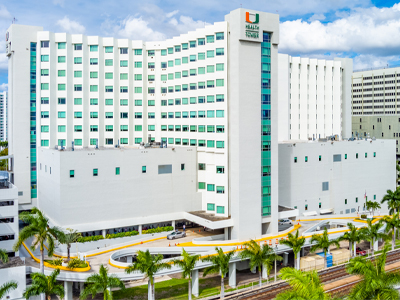
Cardiac Surgery at UHealth Tower
1400 Northwest 12th Avenue, Suite 1
Miami, FL 33136
Get Directions
Our Experts
Why Choose UHealth for CABG and Hybrid Coronary Revascularization?
Pioneering Care. UHealth is among the few centers in South Florida offering Hybrid Coronary Revascularization, reflecting our commitment to advanced treatment options.
Expert Collaboration. Our surgeons and interventional cardiologists work side by side to provide the most effective, least invasive treatment possible.
Comprehensive Options. Whether CABG, HCR, angioplasty, or minimally invasive techniques, we tailor the approach to your needs.
Academic Medicine Advantage. As part of the University of Miami Miller School of Medicine, we lead research and innovation in hybrid approaches.
Patients Also Ask
Questions? We're here to help.
Our appointment specialists are ready to help you find what you need. Contact us today.