
Open aneurysm repair is a surgical procedure to repair a bulge, or aneurysm, in the wall of the aorta, the body's largest blood vessel.
At UHealth – University of Miami Health System, our renowned vascular surgeons perform this life-saving procedure with exceptional skill to prevent a dangerous aneurysm rupture and restore your cardiovascular health.
Who Is a Candidate for Open Aneurysm Repair?
This surgical procedure is often recommended for patients with an aortic aneurysm that is large, growing quickly, or causing symptoms. It is most commonly performed for an Abdominal Aortic Aneurysm (AAA) but is also used for a Thoracic Aortic Aneurysm (TAA).
Patient eligibility for open aneurysm repair depends on several factors, including the aneurysm's specific size, shape, and location, as well as your overall health profile. Our cardiovascular surgery team conducts a thorough evaluation to determine the best course of action for you.
While a minimally invasive option called Endovascular Aneurysm Repair (EVAR) exists, open repair may be the preferred or necessary approach if a patient's anatomy isn't suitable for EVAR. Open repair is also chosen for its proven long-term durability, often requiring fewer follow-up procedures than EVAR.
What to Expect
Understanding the surgical process can help you feel more prepared. Our team ensures you and your family are fully informed every step of the way.
Before the Procedure
A comprehensive evaluation is essential for planning your surgery. This typically involves advanced diagnostic imaging, like a CT angiogram, to create a detailed map of your aorta and the aneurysm.
Your care team will provide specific instructions on how to prepare, which may include medication adjustments and fasting before the surgery. You will also have a detailed consultation with your vascular surgeon and anesthesiologist to discuss the procedure and answer all your questions.
During the Procedure
The open aneurysm repair is a significant surgical procedure performed by our expert team. Here are the key steps:
- You will be placed under general anesthesia to ensure you are comfortable and asleep throughout the operation.
- The vascular surgeon makes an incision to access the aorta. This incision is in the abdomen for an AAA or the chest for a TAA.
- The surgeon then carefully opens the aneurysm and places a durable synthetic tube, called a surgical graft, inside the weakened blood vessel.
- This graft is meticulously sewn to the healthy parts of the aorta above and below the aneurysm, creating a new, secure pathway for blood flow.
- Finally, the original aneurysm wall is wrapped around the new graft to provide extra protection.
After the Procedure
Following the surgical procedure, you will be moved to the intensive care unit (ICU) for close monitoring. This immediate post-operative care is critical for a safe recovery. Once stable, you will transition to a regular hospital room where our team will manage your pain and help you begin to move around, which is an important first step in your recovery.
Risks and Benefits of Open Aneurysm Repair
We believe in a patient-centered approach, which includes a transparent discussion about the potential benefits and risks of any procedure.
Benefits
- Prevents Rupture: The primary benefit is preventing a life-threatening aneurysm rupture.
- Long-Term Durability: The surgical graft is highly durable and is intended to be a permanent fix with a long-term success rate.
- Proven Success: Open repair is a well-established procedure with decades of data supporting its effectiveness and reliability.
Risks
As a major surgery, open aneurysm repair has inherent risks. The risk of mortality for an elective (non-emergency) repair is low. Potential surgical complications can include:
- Bleeding
- Infection of the incision or graft
- Heart, lung, or kidney issues
- Blood clot formation
- Adverse reactions to anesthesia
Be assured that our multidisciplinary team of cardiovascular surgeons, anesthesiologists, and critical care specialists takes every possible precaution to minimize these risks and ensure the best possible outcome.
Recovery and Life After Surgery
The recovery time after open aneurysm repair is a gradual process. Our team will guide you through each phase to ensure a smooth and safe return to your daily life.
- In the Hospital (4 to 7 days): The initial focus is on monitoring your vital signs, managing pain, and slowly increasing your activity level with short walks.
- First Few Weeks at Home: You will have restrictions on activity, such as avoiding heavy lifting for 4 to 6 weeks. Our team will provide detailed instructions on caring for your incision and symptoms that warrant a call to your doctor.
- Long-Term (2 to 3 months and beyond): Most patients can return to driving, work, and normal activities within a few months. Lifelong management of cardiovascular risk factors, such as high blood pressure, is crucial for your continued health.
The estimated recovery time provides a general guideline, but your personal recovery will be supervised by your medical team and may differ.
Alternatives to Open Aneurysm Repair
The main alternative to open repair is Endovascular Aneurysm Repair (EVAR). EVAR is a minimally invasive procedure where a stent graft is delivered through catheters inserted into arteries in the groin. The choice between open repair and EVAR is a highly personalized one, depending on your aneurysm's anatomy, your overall health, and a detailed discussion with your UHealth vascular surgeon.
Hybrid Aortic Surgery
For highly complex cases, hybrid approaches may be used. These combine open surgery with stent graft placement:
- Debranching surgery: Rerouting vessels from the arch before stent graft placement.
- Staged procedures: Performing open and endovascular repairs in phases for safety.
Frequently Asked Questions
Open Aneurysm Repair: At a Glance
- Procedure Type: Major surgery (Vascular Surgery / Aortic Surgery)
- Anesthesia: General anesthesia
- Typical Hospital Stay: 4 to 7 days
- Typical Recovery Time: 2 to 3 months for full recovery
Our Location
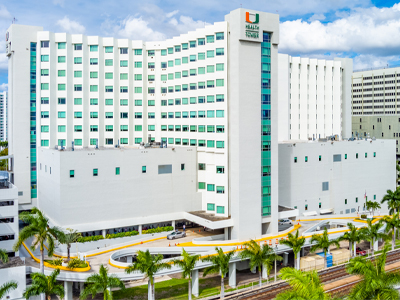
Cardiac Surgery at UHealth Tower
1400 Northwest 12th Avenue, Suite 1
Miami, FL 33136
Get Directions
Our Experts
Why Choose UHealth for Aortic Surgery?
High-Volume Expertise. Hundreds of aortic repairs each year, including rare and re-do surgeries.
Advanced Safety Protocols. Brain, heart, kidney, and spinal cord protection methods.
Comprehensive Care. Multidisciplinary planning with cardiac surgery, vascular surgery, cardiology, anesthesia, and intensive care.
Innovation and Research. Access to clinical trials and new devices.
End-to-End Support. From initial evaluation through lifelong follow-up.
Schedule an Appointment
If you or a loved one has been diagnosed with an aortic aneurysm, aortic dissection, or another aortic condition, our team is ready to help.