
5 min read | March 26, 2025
Food is good—sometimes even great. But food allergies are common and can be dangerous. The best way to keep your children safe is to prevent allergic reactions before they happen.
Know your allergens
The first step to staying safe is learning which foods cause allergic reactions in you and your family members.
The most common food allergens are:
- Peanuts
- Tree nuts (such as almonds or walnuts)
- Milk
- Eggs
- Wheat
- Soy
- Fish
- Shellfish
Always check food labels and ask about ingredients when eating outside the house. If you’re unsure whether something is safe, do not allow your child to eat it.
Always carry your child’s allergy medicine
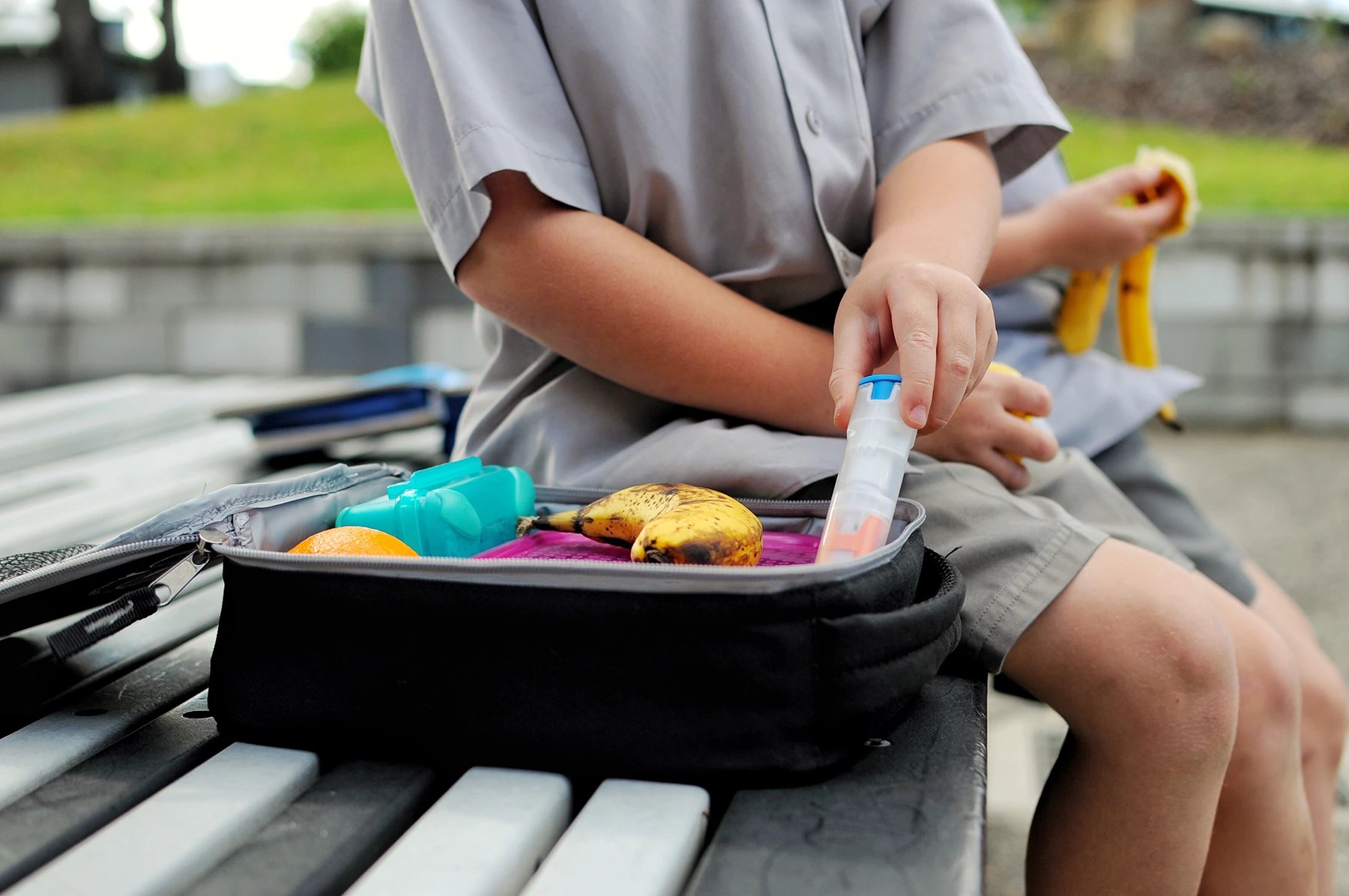
If your child has a food allergy, always carry an epinephrine auto-injector, such as an EpiPen. Your child should have one at school and with them at playdates, sleepovers, after-school activities, and sports.
Epinephrine auto-injectors can stop a dangerous reaction called anaphylaxis, which can make it hard to breathe. Without swift action, anaphylaxis can be fatal.
Make sure your child’s injector is not expired and that you know how to use it. If the only injector available is expired, it may still be used if the liquid is clear and free of particles or discoloration. Administering an expired injector is safer than giving no medication during a severe reaction.
How to use an epinephrine auto-injector
If someone has a severe allergic reaction, using an auto-injector quickly can save their life. There are different types of devices, so be sure you understand how to use your child’s specific injector. Children can begin learning how to use their injector around age 5.
Follow these steps when using an EpiPen:
- Remove the blue safety cap.
- Hold the injector firmly with the orange tip pointing down — remember, “Blue to the Sky, Orange to the Thigh.”
- Push the orange tip against the outer thigh (this can be done through clothing).
- Hold it in place for 5 seconds.
After using the injector, call 911 or go to the emergency room immediately. The medication can wear off, and additional medical treatment may be needed.
Speak up about your child’s allergy
Make sure the people around your child know about their food allergies. Inform teachers, caregivers, friends, and family members about which foods must be avoided and what to do in an emergency.
At restaurants, always ask whether food contains or may have come into contact with allergens. Do not allow food sharing at school. When traveling, bring safe snacks and research allergy-friendly dining options ahead of time.
Know the signs of an allergic reaction
Watch for the following symptoms:
- Hives (red, raised, itchy rash)
- Swelling, especially of the face, lips, or tongue
- Trouble breathing
- Stomach pain, vomiting, or diarrhea
If these symptoms occur, use an epinephrine auto-injector immediately and seek emergency medical care. It is safer to give the injection promptly than to delay treatment.
Should I introduce my baby to allergens?
Some studies suggest that introducing common allergens—such as peanut products or eggs—before a child’s first birthday may reduce the risk of developing food allergies. Speak with your child’s pediatrician to determine whether early introduction is appropriate for your baby.
Food allergies can be frightening, but preparation saves lives. Know your child’s allergens, always carry their medication, and advocate for their safety. With the right steps, children with food allergies can live confidently and safely.
Being careful isn’t about fear — it’s about staying strong and safe.
For more information about keeping your child safe from food allergies, talk to your child’s doctor or contact the Injury Free Coalition for Kids, a program of Jackson Hospital and the University of Miami, funded by The Children’s Trust, at 305-243-9080 or visit www.injuryfree.org.
Written by Travis Satnarine, M.D., with Julie Belkowitz, M.D., M.P.H., Oneith Cadiz, M.D., Lyse Deus, M.Ed., and Taylor Rosenbaum, M.D., M.A.
- American College of Allergy, Asthma & Immunology: Food Allergy
- Simons FE, Gu X, Simons KJ. Outdated EpiPen and EpiPen Jr auto-injectors: past their prime? J Allergy Clin Immunol. 2000.
- Weir WB et al. Expired Epinephrine Maintains Chemical Concentration and Sterility. Prehospital Emergency Care. 2018.
- ACAAI: Epinephrine Auto-Injector
- AAAAI: When Children Should Assume Responsibility for Self-Treatment
- Fleischer DM et al. A Consensus Approach to the Primary Prevention of Food Allergy Through Nutrition. J Allergy Clin Immunol Pract. 2021.