Skip to Main Content
  • UHealth |
  • Bascom Palmer Eye Institute

Knowing Your Cancer Risk Can Be Empowering

Sylvester Comprehensive Cancer Center
  • Appointments
  • Locations
  • Pay a Bill
  • Refer a Patient
  • International Patients
  • Donate Now
  • Search
  • Patient Login
  • Find a Doctor
  • Cancer Types & Treatments Page 1
    Cancer Types
    • Basal Cell Skin Cancer of the Eye
    • Benign Eye Diseases
    • Bladder Cancer
    • Bone and Soft Tissue Sarcoma
    • Brain and Spine Tumors
    • Breast Cancer
    • Colorectal Cancer
    • Cysts and Tumors of the Pleura
    • Endocrine Cancers
    • Eye and Ocular Cancer
    • Genitourinary Cancers
    • Glioblastoma
    • Gynecologic Cancers
    • Head and Neck Cancers
    • Hematologic (Blood) Cancers
    • Hodgkin Lymphoma
    • Leukemia
    • Liver Cancer
    • Lung and Chest Cancer
    • Melanoma and Merkel Cell Carcinomas
    • Multiple Myeloma
    • Non-Hodgkin Lymphoma
    • Ocular Lymphoma
    • Pancreatic Cancer
    • Pediatric Cancers
    • Prostate Cancer
    • Skin Cancers
    • Bone and Soft Tissue Sarcoma
    • Stomach Cancer
    • Thyroid Cancer
    View all Cancer Types
    Treatments
    • Bone Marrow and Stem Cell Transplant
    • Breast Reconstruction
    • CAR T-cell Therapy
    • Gamma Knife Radiosurgery
    • Hyperthermic Intraperitoneal and Intrapleural Chemotherapy (HIPEC)
    • Laser Ablation
    • Laser Interstitial Thermal Therapy
    • Minimally Invasive Brain Tumor Surgery
    • Precision Medicine
    • Proton Therapy
    • Radiation Therapy
    • Radioactive Iodine Therapy
    Cancer Types
    • Basal Cell Skin Cancer of the Eye
    • Benign Eye Diseases
    • Bladder Cancer
    • Bone and Soft Tissue Sarcoma
    • Brain and Spine Tumors
    • Breast Cancer
    • Colorectal Cancer
    • Cysts and Tumors of the Pleura
    • Endocrine Cancers
    • Eye and Ocular Cancer
    • Genitourinary Cancers
    • Glioblastoma
    • Gynecologic Cancers
    • Head and Neck Cancers
    • Hematologic (Blood) Cancers
    • Hodgkin Lymphoma
    • Leukemia
    • Liver Cancer
    • Lung and Chest Cancer
    • Melanoma and Merkel Cell Carcinomas
    • Multiple Myeloma
    • Non-Hodgkin Lymphoma
    • Ocular Lymphoma
    • Pancreatic Cancer
    • Pediatric Cancers
    • Prostate Cancer
    • Skin Cancers
    • Bone and Soft Tissue Sarcoma
    • Stomach Cancer
    • Thyroid Cancer
    View all Cancer Types
  • Patients & Families
    For Patients & Families
    • Your First Visit
    • Parking Information
    • Frequently Asked Questions
    • Classes & Events
    • Nurse Navigators
    • Interpreter Services
    • Clinical Trials
    • International Patients
    • Medical Records
    • Quality and Patient Safety
    • Patient Educational Materials
    • Advance Directives
    • Bereavement Support

    Cancer Prevention & Screening
    • Why Get Screened?
    • Hereditary Cancer Risk
    • Breast Cancer Screening
    • Cervical Cancer Screening
    • Colorectal Cancer Screening
    • Lung Cancer Screening
    • Prostate Cancer Screening
    • Skin Cancer Screening
    • Stomach Cancer Screening
    • Lifestyle Medicine
    Cancer Supportive Care
    • Classes & Events
    • Acupuncture
    • Adolescent and Young Adult (Ages 15-39) Program
    • Art Therapy
    • Emotional and Mental Well-Being
    • Exercise Oncology
    • Massage Therapy
    • Music Therapy
    • Nutrition
    • Oncology Social Work Services
    • Spiritual Care
    • Support Groups & Programs
    • Wigs and Head Coverings
    • Yoga Therapy
    • View All Cancer Supportive Care
    Cancer Survivorship Care
    • Cancer Survivorship & Supportive Care Institute
    • Survivorship Care
    • Survivorship FAQs
    • Your Survivorship Information
    • Cancer Supportive Care
    • Survivorship News
    • Education & Events
    • Institute Leadership
    • Survivorship Team
    • Survivorship And Supportive Care Research

    Quick Links

    • Appointments
    • Find a Doctor
    • Pay a Bill
    • Insurance Plans Accepted
    • MyUHealthChart
    Donate Today
    Quick links
    • Appointments
    • Find a Doctor
    • Pay a Bill
    • Make a Gift
    • Insurance Plans Accepted
    • MyUHealthChart
    For Patients & Families
    • Your First Visit
    • Parking Information
    • Frequently Asked Questions
    • Classes & Events
    • Nurse Navigators
    • Interpreter Services
    • Clinical Trials
    • International Patients
    • Medical Records
    • Quality and Patient Safety
    • Patient Educational Materials
    • Advance Directives

    Cancer Prevention & Screening
    • Why Get Screened?
    • Hereditary Cancer Risk
    • Breast Cancer Screening
    • Cervical Cancer Screening
    • Colorectal Cancer Screening
    • Lung Cancer Screening
    • Prostate Cancer Screening
    • Skin Cancer Screening
    • Stomach Cancer Screening
    • Lifestyle Medicine
    Cancer Supportive Care
    • Classes & Events
    • Acupuncture
    • Adolescent and Young Adult (Ages 15-39) Program
    • Art Therapy
    • Emotional and Mental Well-Being
    • Exercise Oncology
    • Massage Therapy
    • Music Therapy
    • Nutrition
    • Oncology Social Work Services
    • Spiritual Care
    • Support Groups & Programs
    • Wigs and Head Coverings
    • Yoga Therapy
    • View All Cancer Supportive Care
    Cancer Survivorship Care
    • Cancer Survivorship & Supportive Care Institute
    • Survivorship Care
    • Survivorship FAQs
    • Your Survivorship Information
    • Cancer Supportive Care
    • Survivorship News
    • Education & Events
    • Institute Leadership
    • Survivorship Team
    • Survivorship And Supportive Care Research
    About Sylvester
    • Why Choose Sylvester
    • Message from the Director
    • NCI-Designated Cancer Center
    • Cancer Center of Excellence
    • Our History
    • Mission, Vision & Values
    • Facts and Figures
    • Impact Reports
    • Leadership
    • Partners in Our Mission
    • Careers
    • Cancer Center Volunteers
    • Make a Gift
    • Health News
    • Contact Us
  • Research
    Clinical Trials
    • Find a Clinical Trial
    • Understanding Clinical Trials
    • Clinical Trials FAQ's
    • Phase 1 Clinical Trials
    About Our Research
    • Research Programs
    • Engineering Cancer Cures
    • Faculty
    • Labs
    Research Resources
    • Clinical Research Services
    • Shared Resources
    • Data Science
    • SCAN 360
    • Funding Opportunities
    • Tumor Registry
     
    • Medical Library
    • Grant Writing Support
    • Human Subject Research Office
    • Regulatory Oversight
    • IACUC
    • Responsible Conduct of Research (RCR)
    Clinical Trials
    • Find a Clinical Trial
    • Understanding Clinical Trials
    • Clinical Trials FAQ's
    • Phase 1 Clinical Trials
    About Our Research
    • Research Programs
    • Engineering Cancer Cures
    • Faculty
    • Labs
    Research Resources
    • Clinical Research Services
    • Shared Resources
    • Data Science
    • SCAN 360
    • Funding Opportunities
    • Tumor Registry
    • Medical Library
    • Grant Writing Support
    • Human Subject Research Office
    • Regulatory Oversight
    • IACUC
    • Responsible Conduct of Research (RCR)
  • Education and Training
    Education and Training
    • About Us
    • High School, Undergraduate, & Postbaccalaureate Students
    • Medical Students
    • Graduate Program
    • Postdoctoral Training
    • Clinical Fellowships
     
    • Faculty Development
    • Events Calendar
    Education and Training
    • About Us
    • High School, Undergraduate, & Postbaccalaureate Students
    • Medical Students
    • Graduate Program
    • Postdoctoral Training
    • Clinical Fellowships
    • Faculty Development
    • Events Calendar
  • Community Engagement
    Community Outreach Activity
    • What We Do
    • Game Changer Vehicles
    • Request Our Services
    • Who We Are
    • The Area We Serve
    • Community Partnerships
    • Unite Us
    • Community Advisory Committee (CAC)
    • Partnership Matching Request Form
    • Spotlight Corner
    Community Engagement
    • Firefighter Cancer Initiative
    • Global Oncology
    • World Health Organization
    • Avanzando Caminos: Hispanic/Latino Cancer Survivorship Cohort Study
    Community Outreach Activity
    • What We Do
    • Game Changer Vehicles
    • Request Our Services
    • Who We Are
    • The Area We Serve
    • Community Partnerships
    • Unite Us
    • Community Advisory Committee (CAC)
    • Partnership Matching Request Form
    • Spotlight Corner
    Community Engagement
    • Firefighter Cancer Initiative
    • Global Oncology
    • World Health Organization
    • Avanzando Caminos: Hispanic/Latino Cancer Survivorship Cohort Study
  • About Sylvester
    About Sylvester
    • Why Choose Sylvester
    • Message from the Director
    • NCI-Designated Cancer Center
    • Cancer Center of Excellence
    • Our History
    • Mission, Vision & Values
    • Facts and Figures
    • Impact Reports
     
    • Leadership
    • Partners in Our Mission
    • Careers
    • Cancer Center Volunteers
    • Make a Gift
    • Health News
    • Contact Us
    About Sylvester
    • Why Choose Sylvester
    • Message from the Director
    • NCI-Designated Cancer Center
    • Cancer Center of Excellence
    • Our History
    • Mission, Vision & Values
    • Facts and Figures
    • Impact Reports
    • Leadership
    • Partners in Our Mission
    • Careers
    • Cancer Center Volunteers
    • Make a Gift
    • Health News
    • Contact Us
Patient Login
  • University of Miami Health System
  • Sylvester Comprehensive Cancer Center
  • Cancer Survivorship and Supportive Care
  • Survivor Newsletters and Workshops
  • Spring 2024 Newsletter
  • Knowing Your Cancer Risk Can Be Empowering
  • University of Miami Health System
  • Sylvester Comprehensive Cancer Center
  • Cancer Survivorship and Supportive Care
  • Survivor Newsletters and Workshops
  • Spring 2024 Newsletter
  • Knowing Your Cancer Risk Can Be Empowering

Knowing Your Cancer Risk Can Be Empowering

« Back to Spring 2024 Newsletter
Survivor Newsletters and Workshops
  • Summer 2025 Newsletter
  • Winter 2025 Newsletter
  • Fall 2024 Newsletter
  • Summer 2024 Newsletter
    • Palliative Care is Not Hospice
    • 5 Things I Learned About Cancer From My Diagnosis
    • Young Sarcoma Survivor Embraces Life After Battling Cancer
  • Spring 2024 Newsletter
    • Knowing Your Cancer Risk Can Be Empowering
    • When Cancer Survivors Look Good, They Feel Better
    • Music is Medicine
  • Winter 2024 Newsletter
    • Cancer’s Impact on the Hispanic Community
    • A Conversation with Dr. Felicia Marie Knaul
    • Exercise After Cancer Treatment Improves Health and Lowers Risk of Recurrence
    • Sweet Potato Ginger Pudding
    • There is Always Hope
  • Summer 2023 Newsletter
    • Financial Toxicity
    • Nutrition and Cancer Survivorship
    • Can More Meatless Meals Lower Your Cancer Risk?
    • Should People with Cancer Exercise?
  • Spring 2023 Newsletter
    • The Power of Reframing
    • The Weight of a Word: Survivor
    • Sylvester Goes to Capitol Hill in Support of Comprehensive Cancer Survivorship Act
    • Sylvester Celebrates Inaugural Cancer Survivorship Symposium
    • Art Therapy: More Than Just a Coping Skill
    • From Cancer Survivor to Nurse: A Tale of Empathy
  • Fall 2022 Newsletter
    • Two Women, Two Points on the Cancer Survivorship Journey
    • Support at Any Stage
    • Stories
      • If My Parent Had Cancer, Am I at a Higher Risk?
      • New Online Tool Supports Cancer Patient Wellness
  • Summer 2022 Newsletter
    • A Matter of Survival
    • Oncofertility 101
    • Stories
      • New Lifestyle Guidelines for Cancer Survivors
      • Patient Beware: Study Finds Potential for Massive Cancer Nutrition Misinformation on Pinterest
      • What Is It Like to Live with Advanced Cancer?
  • Winter 2022 Newsletter
    • The Mind-Body Connection
    • Survivorship Clinic
    • A Match Made in Heaven
    • Stories
      • Sex: The Breast Cancer Topic No One Talks About
      • Take Care of Yourself During Radiation Therapy
  • Fall 2021 Newsletter
    • Welcome Letter
    • Coming to Terms with Change and Knowing My Limits
    • Stories
      • 11th Dolphins Challenge Cancer Event Raises Millions for Research at Sylvester
      • Finding Strength Through Music
      • Reduce Chronic Inflammation - With Food
    • Cancer Support Services Events
  • Cancer Support Services Events
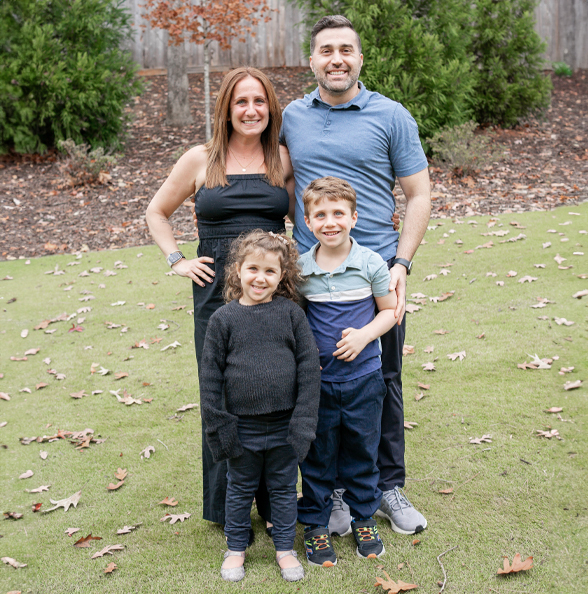
Tracey Hecht and her familyTracey Hecht and her family

Tracey Hecht still remembers receiving the news on May 12, 2020. Walking with her two children, she paused the stroller near a waterfall in the park to answer a phone call. The tranquil waters nearby did nothing to quench the growing negative feelings — it was breast cancer.

That unforgettable experience was three years ago for Hecht, who finished treatment in 2022 and has been cancer-free for more than two years.

“I’m feeling pretty good and healthy, though I still have some aftereffects and worry about recurrence,” Hecht says. “I have proudly hit the three-year mark and have a positive outlook as I prioritize what’s important in my life.”
Tracey Hecht

Each year, more than 200,000 women develop breast cancer and will go through an experience similar to Hecht’s. However, not all will know if they have a genetic predisposition that puts them at high risk.

Before her diagnosis in 2010, Hecht found out she had the BRCA 1 gene.

This gene produces proteins that help repair damaged DNA, but if it develops specific mutations, cancer is more likely to occur, such as breast and ovarian cancer.

“Learning that one carries a pathogenic genetic mutation should not be perceived as bad news but rather empowering news,” says Carmen Calfa, M.D., a breast medical oncologist at Sylvester Comprehensive Cancer Center and Hecht’s oncologist. “It allows you to receive the right cancer screening and preventive measures at the right time.”

Tests are available to see if someone has inherited the BRCA1 or BRCA2 genetic mutations.

Though not currently recommended for the general public, they can be provided as needed for those with a higher likelihood of carrying these variants, such as an individual with a family history of cancer or certain ethnic groups. Aside from the BRCA 1 and 2 mutations, other pathogenic genes can be found through genetic testing, says Dr. Calfa.

Should You Plan a Family if You Might Get Cancer?

While the preventive follow-ups lasted for more than a decade, Hecht wanted children and was worried about how the MRI would interact with her pregnancy. If Hecht had any regrets from her health experience, it was the pause she made on her testing.

“Instead of continuing with ultrasound, I stopped for two years out of fear of it interfering with my pregnancies and breastfeeding,” Hecht recalled. “Looking back, I wish I still would have gotten some imaging for my breast like I was doing with my pelvis, but the young brain thinks it’s invincible.”

“It’s important for BRCA 1 carriers planning a family to understand their risk and seek expert guidance,” Dr. Calfa says. “Reproductive assisted fertility can help select unaffected embryos, preventing transmission of the pathogenic gene. Depending on the stage of pregnancy, regular breast images can be safely done, and any changes should be promptly addressed.”

When Hecht was breastfeeding, she had the feeling there was something wrong.

When she was breast pumping with her firstborn, Hecht found out she had a lot of clogged breast ducts and lumps as a result. Though she didn’t think much of it, by her second child, Hecht remembered feeling beyond tired and getting night sweats and fevers.

“It turns out the sweats were due to my regional lymph nodes, which also explained my stomach issues,” Hecht says, “I had my biopsy on a Friday and, a few days later, got diagnosed with breast cancer.”

With her diagnosis known, it was time for the Hecht family to act.

The process was a swift one for Hecht, who understood what her father was going through as he was diagnosed with lymphoma years prior.
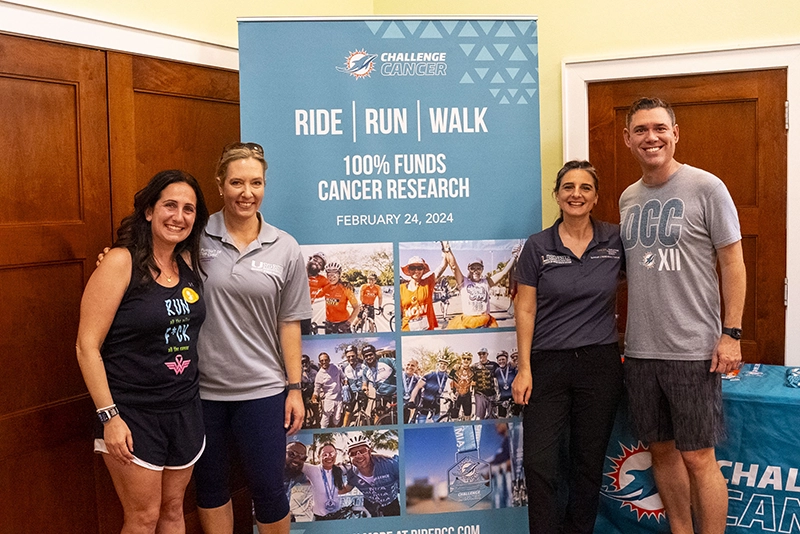
Tracy Hecht with Dr. Crane and othersTracey Hecht, breast cancer patient, celebrates DCC with Tracy Crane and other members of Sylvester.

“The waiting for the results was the worst part,” Hecht says. “As soon as my family knew of the results, it was time to get things done. My brother drove my mom down to be with me, and my husband put his emotions aside and became even more hands-on. Even my friends and neighbors pitched in with driveway dinners and going on walks.”

While all sorts of statistics are out there, Dr. Calfa assured Hecht, “Let go of the statistics and all sorts of scenarios as your cancer is your cancer and will behave in its unique way.”

After all the ups and downs – 16 rounds of chemo, various therapies and the support of her cancer mentors, one of whom Dr. Calfa introduced to her – she says that, in addition to being cancer-free, her life has improved. She feels greater empathy and does not stress about the small details. She has also grown closer to her loved ones.

Hecht’s advice to other women who receive a breast cancer diagnosis:

  • Don’t be afraid to accept help. While the majority of those with cancer think it makes them weak, you aren’t admitting defeat. Take all the help you can get, and don’t be scared to make requests.
  • Focus on yourself and your health.
  • Keep moving. This mindset allowed Hecht to keep feeling just like herself. Cancer takes so much, and exercising kept Hecht in control with a part of her old life still there.
  • Keep up with routine, preventive testing.

Sylvester has a dedicated program for positive genetic mutation carriers called the Genetic Predisposition Syndrome Clinic (GPS), which the Eileen Youtie Hereditary Predisposition Initiative supports. Built to be a home for families diagnosed with a hereditary cancer predisposition, the clinic is committed to conducting research toward discovering new cancer treatments and ways to prevent cancer, especially in those who are at the highest risk.


logo--sylvester

NCI Designated

USNWR Cancer 2025-2026 Badge

Cancer Center of Excellence
Quick links
  • Appointments
  • Find a Doctor
  • Pay a Bill
  • Make a Gift
  • Insurance Plans Accepted
  • MyUHealthChart

Patient & Families
  • Cancer Treatments
  • Cancer Supportive Care
  • Your First Visit
  • Frequently Asked Questions
  • Nurse Navigators
  • Interpreter Services
  • Clinical Trials
  • International Patients
  • Medical Records
  • Price Transparency
  • Florida Health Finder
Research
  • Research at Sylvester
  • Research Programs
  • Research Labs & Faculty
  • Clinical Research Services
  • Shared Resources
  • Clinical Fellowship
  • Community Outreach Activity
About Sylvester
  • Why Choose Sylvester
  • NCI-Designated Cancer Center
  • Cancer Center of Excellence
  • Our History
  • Impact Reports
  • Mission, Vision & Values
  • Quality and Patient Safety
  • Leadership
  • Careers
  • Volunteers
  • For Media
  • Contact Us
  • Make a Gift

University of Miami Centennial Logo

Medical Disclaimer | Terms of Use | Privacy Statement | HIPAA Notice of Privacy Practices | For Employees
© 2025 University of Miami Health System. All rights reserved.