

What is Genicular Artery Embolization?
Genicular artery embolization (GAE) is a novel, minimally invasive procedure that alleviates chronic knee pain. It is primarily used for pain caused by osteoarthritis (OA), as well as conditions like synovitis (inflammation of the joint lining) and hemarthrosis (bleeding into the joint). Osteoarthritis (OA) is a joint disease where cartilage wears down, bone remodels, and inflammation damages the synovial lining — the tissue that lines the joint capsule.
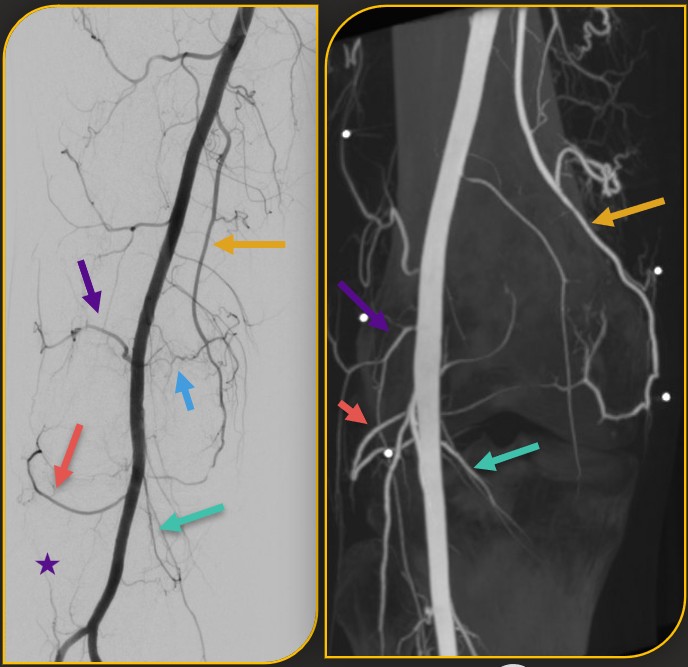
During GAE, an interventional radiologist uses X-ray guidance to place a tiny catheter into the genicular arteries, which are the blood vessels that supply the knee joint. Small particles (called embolic agents) are injected to block abnormal blood vessels that cause inflammation and pain.
This blockage effectively reduces blood flow to the inflamed tissues. By “quieting” the inflammation, GAE can significantly improve pain, mobility, and overall quality of life — all without major surgery.

Who Can Benefit
GAE may be beneficial for people who have knee osteoarthritis pain that does not improve with conservative management such as physical therapy, medications, or joint injections for at least 3 months and:
- Are not a candidate for, or want to delay or avoid, total knee replacement surgery.
- Are 40 to 80 years old and want to stay active — from walking and traveling to running, basketball, or hiking.
- Are younger athletes or weekend warriors who want to stay active without being limited by knee pain, or individuals who want to enjoy daily activities with less pain.
GAE may also help people who have pain that continues after knee replacement (20–30% of patients) or suffer from post-surgical hemarthrosis (bleeding inside the joint, up to 5% of patients).
What to Expect
Before the procedure
- You will meet with an interventional radiologist to review your medical history, previous treatments, and imaging results.
- Your doctor will explain the procedure, its benefits, risks, and available alternatives.
- You may need to adjust or stop certain medications before the procedure.
During the procedure
- The procedure is performed under moderate sedation and local anesthesia.
- The radiologist inserts a thin catheter through a small puncture, usually in the groin or wrist.
- The catheter is guided into the genicular arteries, which supply blood to the lining of the knee.
- Tiny particles are injected to block abnormal blood vessels that contribute to inflammation and pain.
After the procedure
- The majority of patients go home the same day.
- You can usually return to daily activities within a few days.
- Pain relief builds gradually over weeks and can last months to years.
- The most common side effect is temporary skin discoloration near the knee.
Benefits of GAE
Studies show GAE provides meaningful and durable relief for many patients:
- High technical success: 99–100%
- Pain reduction: Average decrease of 40–50 points on a 100-point pain scale at 12 months
- Improved function: 70–80% of patients report better mobility and daily function
- Durability: Relief can last 1–2 years; some patients may need a repeat procedure
- Minimally invasive: No large incisions, hospital stay, or implanted devices
Risks and Side Effects
GAE is considered safe; however, as with any procedure, there are associated risks. Most side effects are minor and temporary:
- Skin discoloration around the knee
- Small bruises or hematomas at the catheter site
- Temporary changes in skin sensation
Rare but reported complications include:
- Skin ulcers
- Bone tissue changes (osteonecrosis)
- Sensation or motor function loss
- Blood vessel injury
Most often, these side effects are temporary.
Why Choose UHealth for GAE?
At the University of Miami Health System, you’ll receive care from national leaders in interventional radiology who are advancing research in GAE.
- Expertise: Our physicians are directly involved in clinical trials shaping the future of GAE.
- Multidisciplinary approach: We collaborate with orthopedic surgeons, rheumatologists, and pain specialists.
- Advanced technology: State-of-the-art imaging ensures safe and precise treatment.
- Proven results: UHealth performs a high volume of minimally invasive procedures with excellent outcomes.
Frequently Asked Questions (FAQs)
Meet Our Experts
Take the Next Step
If knee pain is keeping you from the activities you love, you may be a candidate for genicular artery embolization.
- Schedule an appointment with a UHealth interventional radiologist
- Find a doctor near you
- Learn more about interventional radiology at UHealth
Medically reviewed in November 2025 by Bedros Taslakian, M.D., M.A., EBIR-EV, FCIRSE, FAHA and Felipe Ferreira De Souza, M.D.
Sources
- Genicular Artery Embolization: A Practical Guide for Interventional Radiologists — Endovascular Today
- Taslakian et al. A Prospective Single-Arm Trial of Genicular Artery Embolization for Symptomatic Knee Osteoarthritis: Clinical and Biomarker Outcomes — PubMed
- Taslakian et al. Genicular artery embolization for treatment of knee osteoarthritis pain: Systematic review and meta-analysis
Questions? We're here to help.
Our appointment specialists are ready to help you find what you need. Contact us today.