
JAN.04 - MYELOMA
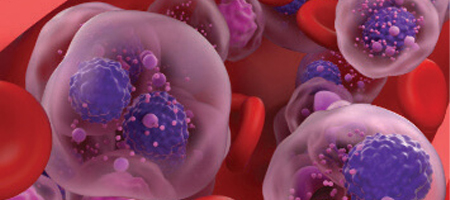
Sylvester researchers found that preventive treatment for cytokine release syndrome prior to teclistamab administration reduces the incidence of this syndrome in multiple myeloma patients, potentially allowing for outpatient care and making the therapy more accessible.
JAN.11 - BRAIN CANCER
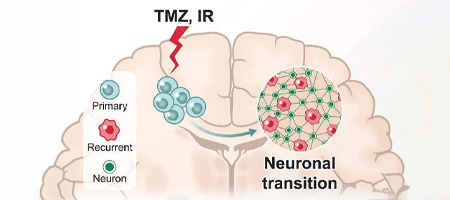
Sylvester researchers discovered that glioblastoma tumors mimic healthy cells, making them harder to treat. They showed that combining two drugs, vemurafenib and temozolomide, can effectively target these resistant tumors, offering new treatment hope.
JAN.29 - CERVICAL CANCER

Sylvester is analyzing the impact of psychological stress and whether it can be mitigated with lifestyle medicine, such as with diet and exercise to help cure cancer.
FEB.01 - HEAD AND NECK CANCER

A promising new therapeutic strategy for a challenging set of cancers emerged when Sylvester researchers demonstrated that the drug olaparib, used alone or with another drug, decitabine, can effectively kill certain head and neck cancer cells.
APR.03 - GASTRIC CANCER

Sylvester researchers used Game Changer vehicles and mobile labs for a community outreach study to screen for and treat Helicobacter pylori, a major gastric cancer risk factor. Their work focuses on preventing gastric cancer in high-risk populations through early detection.
MAY.21 - LEUKEMIA

A Sylvester study found that a leukemia treatment that blocks two proteins, CARM1 and JAK2, works better than treatment that targets only one, offering a promising new approach for leukemia treatment.
MAY.23 - BLOOD CANCER

Research from Sylvester revealed that treating high-risk blood cancer patients with stem cells from unrelated donors who are only partially matched can be effective. The use of cyclophosphamide helps improve the success rate, which is advantageous for groups that are typically underrepresented in donor registries.
JUN.03 - SARCOMA

Sylvester researchers are conducting a phase 1 study introducing a fifth-generation KIT inhibitor medicine to humans to treat metastatic gastrointestinal stromal tumors.
JUL.08 - SKIN CANCER
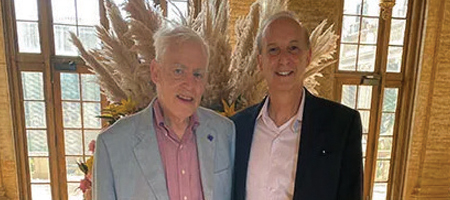
The Bendetson family made a gift to establish the William and Rose Bendetson Skin Cancer Research Endowment in the Dr. Phillip Frost Department of Dermatology and Cutaneous Surgery.
SEP.03 - TRANSPLANT CELLULAR THERAPY

The first patient to receive CAR T-cell therapy for non-Hodgkin lymphoma after a bone-marrow transplant at Sylvester is now cancer-free and fully recovered.
SEP.17 - PROSTATE CANCER
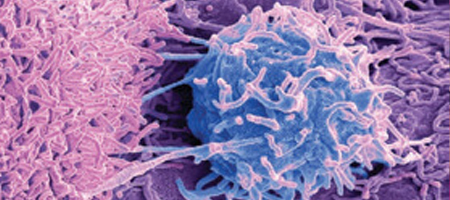
A Sylvester research team contributed significantly to a study that helped resolve a therapy path for prostate cancer patients who have inherited a specific gene mutation that otherwise shortens survival.
OCT.01 - BREAST CANCER

Sylvester hosted more than a dozen events during breast cancer awareness month in October—walks, talks, luncheons, webinars, football games and fashion shows—promoting early detection, supporting survivors and uniting the community.
OCT.24 - PEDIATRIC CANCER

Several pediatric cancer patients at Sylvester attended Taylor Swift's Miami concert, thanks to generous donations from Dolphins Cancer Challenge Foundation board members and other Sylvester supporters, giving the young patients a memorable experience at one of the year's most sought-after concerts.
NOV.04 - LYMPHOMA

Sylvester researchers contributed to a study that is transforming Hodgkin lymphoma treatment, demonstrating that adding nivolumab to a mix of chemotherapy drugs outperforms the standard therapy for advanced stages of the disease.
NOV.20 - NEUROENDOCRINE TUMORS
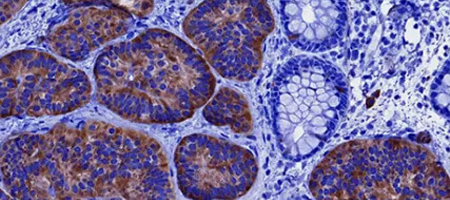
Experts in neuroendocrine and gynecologic cancers at Sylvester partnered with industry leaders to begin an investigator-initiated phase 1 clinical trial evaluating novel combination treatment for patients with these types of cancers that have proved resistant to standard therapies.
DEC.03 - LUNG CANCER

Researchers at Sylvester foresee that within the next five to 10 years, the field will double down on some of the advancements, notably targeted therapies, that have driven progress.