
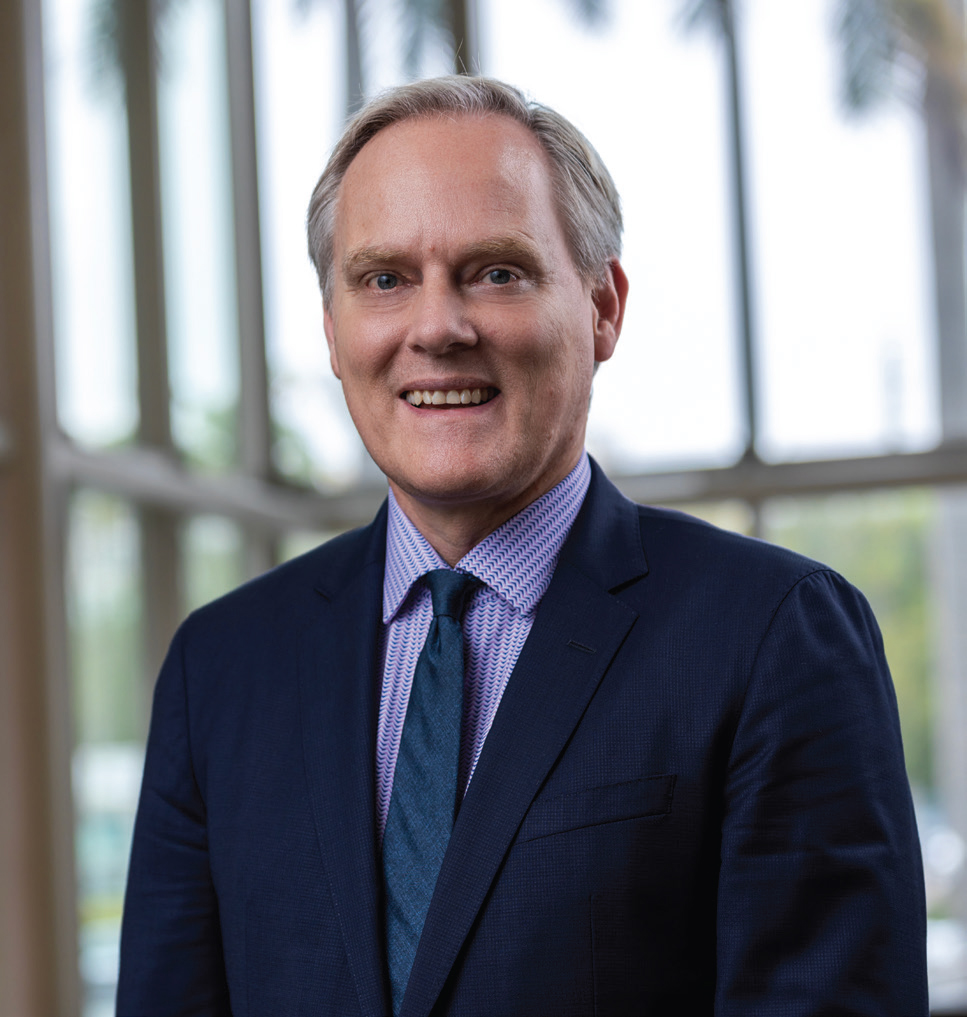
 Dr. C. Ola Landgren
C. Ola Landgren, M.D., Ph.D., chief of the Division of Myeloma and director of the Sylvester Myeloma Institute, is revolutionizing multiple myeloma care. His groundbreaking research may speed up drug approval timelines and enhance therapeutic strategies to deliver better outcomes for patients.
In April, a significant milestone occurred when a U.S. Food and Drug Administration (FDA) committee endorsed the use of minimal residual disease (MRD) as a clinical trial endpoint, a decision rooted in Dr. Landgren's EVIDENCE (evaluating minimal residual disease as an intermediate clinical endpoint for multiple myeloma) meta-analysis, which was published in the journal Blood.
This shift has the potential to fast-track new treatments and reduce the approval process by years, ultimately benefiting patients.
MRD measures the presence of residual tumor cells with extraordinary precision, providing valuable insights into patient outcomes, such as progression-free survival. Incorporating MRD into the approval process allows the FDA to grant accelerated approval for therapies based on MRD negativity (the absence of detectable cancer cells in a patient's bone marrow), with longer-term survival data needed for full approval. Dr. Landgren's 15 years of MRD research, starting at the National Cancer Institute, has led to better testing methods and fostered collaborations with pharmaceutical companies, advancing the precision of this approach.
A NEW STANDARD OF CARE
At Sylvester, Dr. Landgren continues to pioneer quadruple therapy, a combination regimen including a CD38-targeted monoclonal antibody (such as daratumumab or isatuximab), a proteasome inhibitor, an immunomodulatory drug and a steroid. Results from trials show this regimen's ability to achieve deeper responses, extend progression-free survival and improve overall outcomes. Additionally, quadruple therapy is designed to be tolerable for a broad range of patients, including older adults, improving access to leading-edge treatments.
Dr. Landgren is also advancing precision medicine at Sylvester by combining MRD testing with genomic profiling. This enables personalization of treatments based on individual tumor genetics. This tailored approach is challenging the traditional use of therapies like stem cell transplants, with emerging technologies like CAR T-cell therapy and bispecific monoclonal antibodies potentially replacing them for some patients, for improved outcomes.
BREAKTHROUGH MODEL
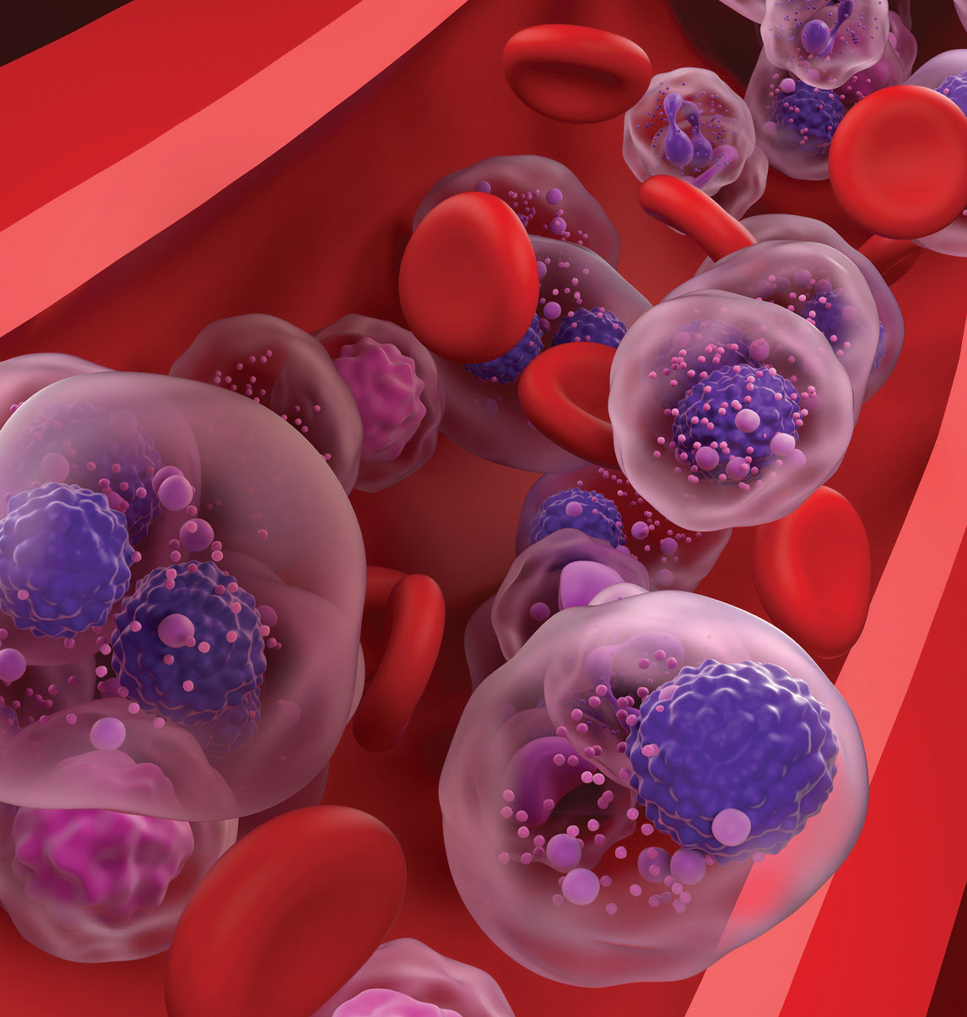
Dr. Landgren and his team developed the Individual Risk Model for Myeloma (IRMMa), a revolutionary computational model that helps predict personalized outcomes for newly diagnosed multiple myeloma patients. Published in the Journal of Clinical Oncology, IRMMa uses tumor genomics and treatment data to provide more accurate prognoses than previous tools. By analyzing genetic sequences from nearly 2,000 patients, the model identifies 90 "driver genes" linked to tumor growth and correlates these markers with treatment outcomes. Leveraging machine learning, IRMMa improves as more data becomes available, ensuring its dynamic and evolving nature.
Dr. Landgren views IRMMa as a significant advancement in precision medicine, offering a personalized approach that improves outcomes for myeloma patients.
INVESTIGATING RISKS
Beyond treatment advancements, Dr. Landgren is investigating the environmental and genetic factors contributing to multiple myeloma. Studies have linked higher levels of monoclonal gammopathy of undetermined significance (MGUS), a precursor to myeloma, to pesticide exposure in farmers, Agent Orange in Vietnam War veterans and toxins at the 9/11 site. Dr. Landgren is co-leading a study with Sylvester Myeloma Institute Associate Director Dickran Kazandjian, M.D., on the risks of myeloma in military officers exposed to burning pits during the Gulf War. The results of this study will shed light on environmental and occupational factors that may increase myeloma risk.
Dr. Landgren's transformative work is reshaping multiple myeloma care. Through innovations like MRD-driven drug approval processes, quadruple therapy and the IRMMa model, he is improving outcomes for myeloma patients. As Sylvester continues to lead in cancer research, Dr. Landgren's ongoing research is helping create a path toward a cure for myeloma.