
JAN. 29 NEURO-ONCOLOGY

A new gene-editing method aims to correct certain mutations in the DNA of mitochondria, which are major producers of energy in the body. The study, led by neuroscientist and Sylvester researcher Carlos Moraes, Ph.D., showed that this method is effective in a model of mitochondrial disease.
FEB. 10 - GENITOURINARY CANCER
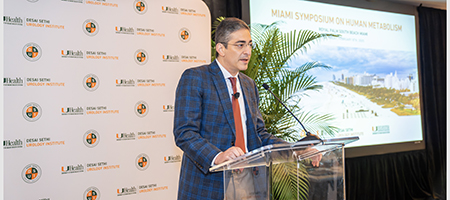
The Desai Sethi Urology Institute’s Miami Symposium on Human Metabolism advanced global collaboration on metabolic processes shaping health and disease, from longevity to cancer. Co-hosted with Sylvester, the event gathered experts to explore how genetics, diet and environment influence outcomes, underscoring metabolism’s broad relevance, noted symposium director Nima Sharifi, M.D.
FEB. 20 - THORACIC CANCER

U.S. News & World Report has rated the lung cancer program “high performing” for 10 consecutive years. The program also earned a three-star ranking, for the last two reporting periods, from the Society of Thoracic Surgeons, a ranking that is one of the most rigorous measures of cardiothoracic surgery quality across the United States and Canada, benchmarking outcomes and overall excellence.
FEB. 28 - LYMPHOMA

Sylvester researcher, Juan Alderuccio, M.D., a hematologist and lymphoma specialist at Sylvester, unveiled data on a new treatment regimen for patients with relapsed or refractory follicular lymphoma. The regimen combines rituximab with the newer drug loncastuximab tesirine. The combination is now backed as a third-line treatment in clinical guidelines issued by the National Comprehensive Cancer Network.
APR. 10 - MYELOMA
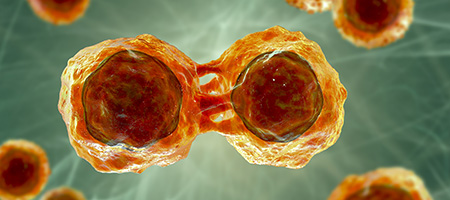
Cancer research is evolving after an FDA panel recommends a new success measure for multiple myeloma trials: minimal residual disease. If enacted, this decision, using data from Sylvester researchers, will allow for new, lifesaving drugs to reach patients years sooner.
APR. 29 - ENDOCRINE TUMORS

Endocrine tumors are often difficult to detect and treat, frequently requiring highly personalized approaches. Theranostics has emerged as an important new tool for these cancers, using targeted radiopharmaceuticals to both identify and deliver radiation directly to tumor cells while sparing healthy tissue. At Sylvester, clinicians treat hundreds of patients each year and are among a small number of U.S. centers with access to first in human theranostic agents, advancing next generation clinical trials and expanding options for patients with endocrine tumors that have limited treatment pathways.
MAY 14 - HEAD AND NECK CANCERS

Sylvester researchers discovered an epigenetic defect in about 20% of head and neck cancers that may make these tumors responsive to two existing FDA-approved drugs, olaparib and decitabine. The research team, including postdoctoral fellow Lucas D. Caeiro, M.D., and researchers Ramiro E. Verdun Ph.D., and Lluis Morey, Ph.D., includes scientists who worked with clinical researchers to bring this discovery from the lab to clinic for patients with advanced, treatment-resistant disease.
MAY 22 - CUTANEOUS ONCOLOGY

Doctors and researchers at Sylvester are making encouraging inroads in the treatment of melanoma. Barbara Bedogni, Ph.D., associate professor in the Dr. Phillip Frost Department of Dermatology and Cutaneous Surgery, developed a neutralizing antibody that shows promise for improving immunotherapy response to melanoma treatment. Jose Lutzky, M.D., director of Cutaneous Oncology Services and Cutaneous and Ocular Oncology Site Disease Group lead at Sylvester, is leading a team of doctors running some 15 clinical trials. The team treats about 550 melanoma patients annually.
JUNE 26 - TRANSPLANT CELLULAR THERAPY

Sylvester, a national leader in transplant cellular therapy, released a new study that evaluated blood cancer patients receiving transplants from unrelated, partially matched donors. With post-transplant cyclophosphamide, outcomes were comparable to fully matched donor transplants. The findings could expand donor options for patients who struggle to find a match, said senior author Antonio Jimenez Jimenez, M.D., a Sylvester researcher
AUG. 12 - GASTROINTESTINAL CANCER

A new Sylvester study led by Nagaraj Nagathihalli, Ph.D., provides insight into the mechanisms that link alcohol and pancreatic cancer. The new findings suggest that inhibiting the cellular molecule CREB might thwart pancreatic tumor development in response to alcohol. The study hints that inhibitors of CREB might have therapeutic potential in people who have high alcohol use.
SEP. 03 - HEMATOLOGY

Physician-evaluators assessed the responses of ChatGPT to 10 questions specific to the field of hematological cancer. They found that the popular AI-powered chatbot performed better at general queries than questions about newer therapies, but issue caution around the use of chatbots.
SEP. 23 - BREAST CANCER

Sylvester’s Rumela Chakrabarti, Ph.D., uncovered why some ER+ breast cancers become resistant to endocrine therapy in a study published in Science Translational Medicine. With funding from the American Cancer Society, her team identified a CD163/PD-L1 macrophage subtype that protects tumors from tamoxifen, revealing a microenvironment-driven survival mechanism and pointing to new strategies to disrupt resistance and improve outcomes for patients with limited treatment options.
OCT. 16 - SARCOMA

Sylvester is one of only 20 institutions worldwide contributing data to GENIE, a registry of tens of thousands of cancer patients. As a globally recognized sarcoma center, Sylvester uses GENIE data to refine personalized care and support research that may lead to new treatment options for patients with this rare cancer.
NOV. 17 - GYNECOLOGICAL CANCER

Sylvester joined forces with Florida’s three other NCI-designated cancer centers and the Florida Cancer Control Research Advisory Board to lead a landmark, statewide initiative, led by Erin Kobetz, Ph.D., M.P.H., aimed at eliminating human papillomavirus (HPV) – the virus responsible for nearly all cervical cancers.
NOV. 20 - PEDIATRIC CANCER

Scientists across Sylvester continue to lead the way toward an even brighter future for children with cancer. Julio Barredo, M.D., director of Sylvester’s Pediatric Oncology Program, noted the expansion of the pediatric bone marrow transplant program and the introduction of cellular therapies. Sylvester offers the region’s only academic phase 1 clinical trials program for pediatric patients.
DEC. 01 - LEUKEMIA

Dr. Mikkael Sekeres led the 2020 and updated 2025 official ASH Acute Myeloid Leukemia guideline panels. The panels included leukemia experts, geriatricians and patients who reviewed and discussed the best available research. The guideline recommendations aim to walk patients and their doctors through the AML treatment decisions in a meaningful and relevant way.